The $10,000 Mistake Most Car Buyers Never See Coming
Rock Molina • February 17, 2026
Before You Buy That Car… Read This First The Importance of a Pre-Purchase Inspection (And Why Lifting the Vehicle Changes Everything)

Quick Summary (For the Busy Buyer)
Buying a used vehicle can feel exciting — but it can also feel risky. A clean interior, shiny paint, and a friendly seller don’t always tell the full story. Many serious issues hide underneath the vehicle where most buyers never look.
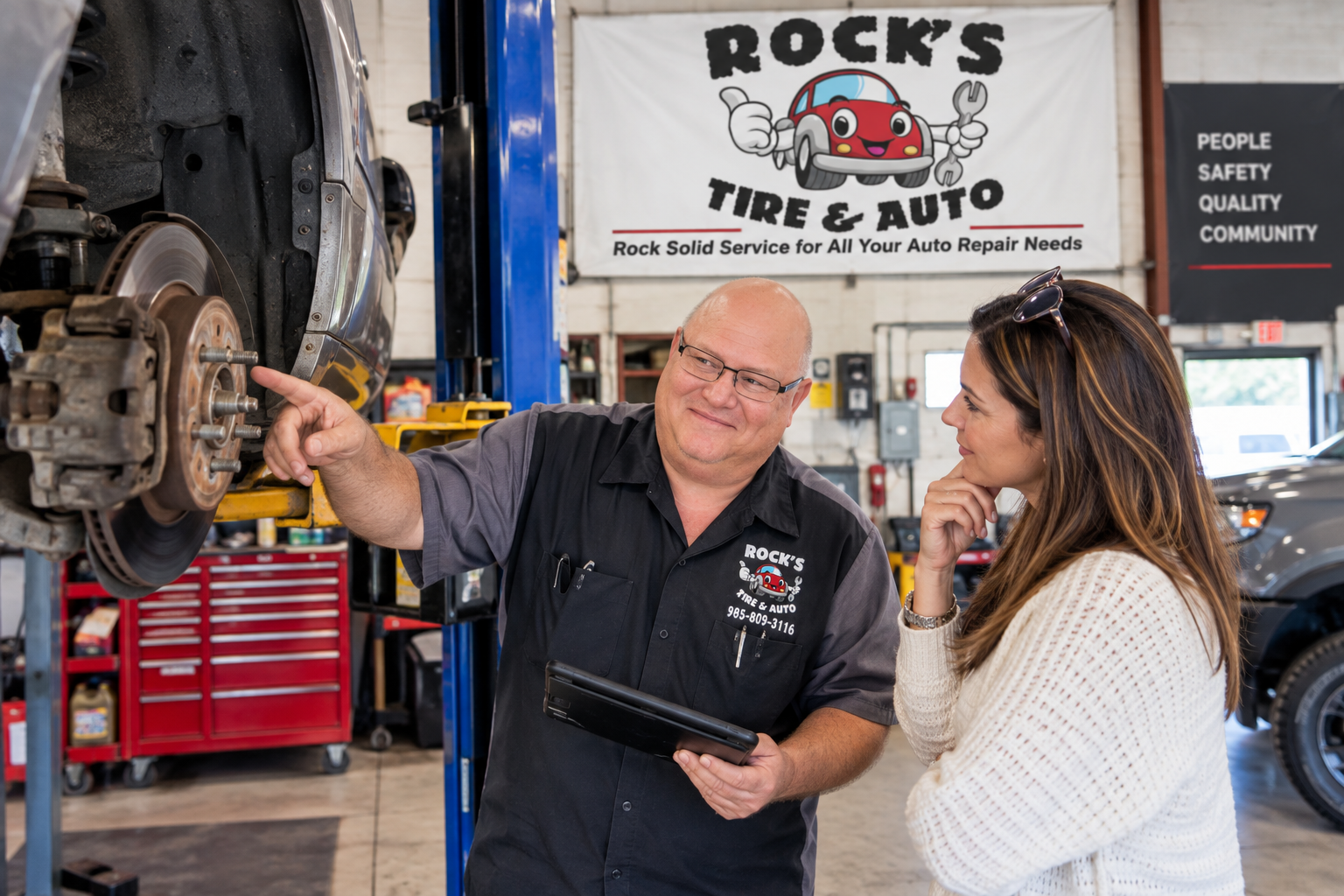
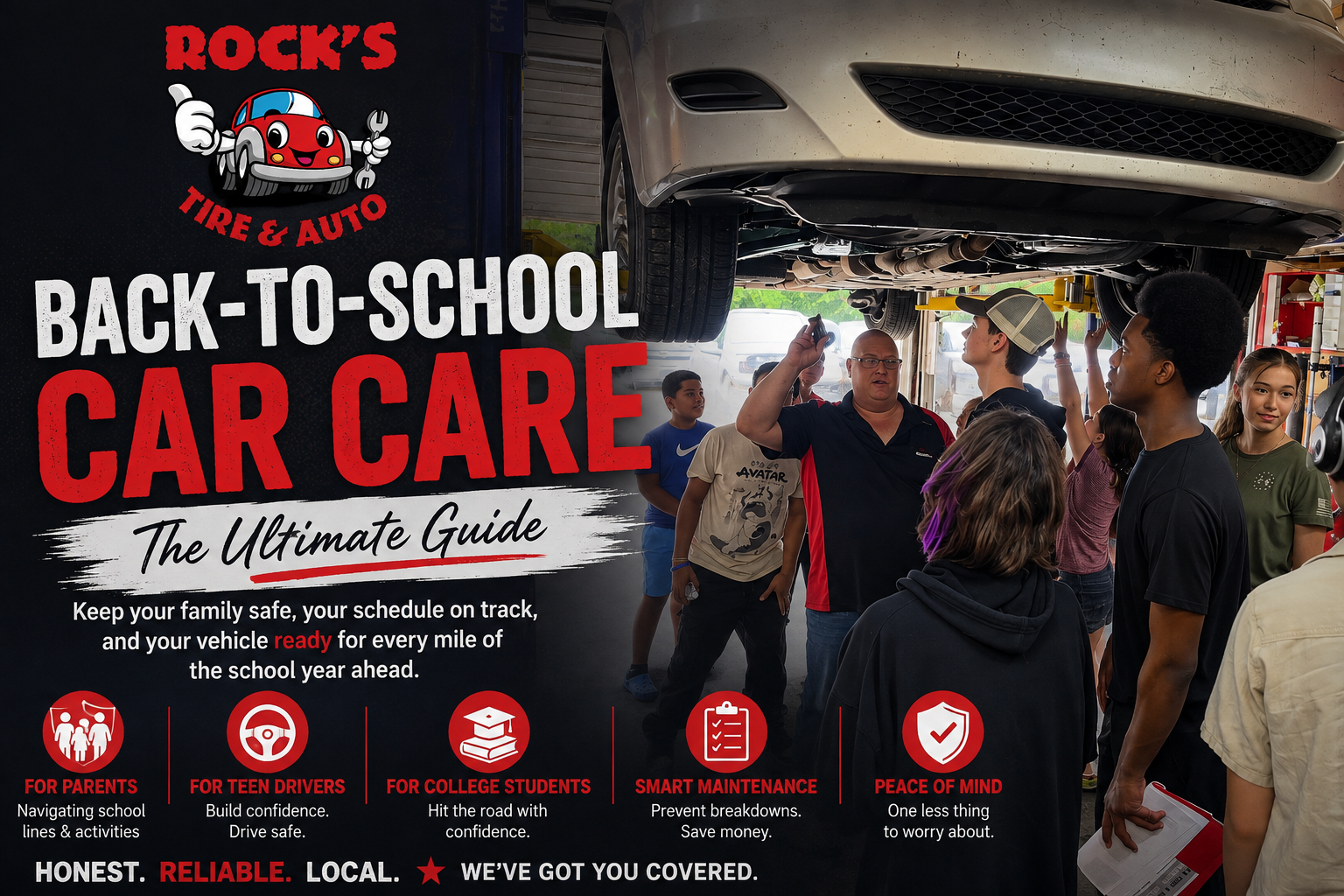
A professional pre-purchase inspection gives you clarity before you commit. At Rock’s Tire & Auto, we lift the vehicle and perform a comprehensive safety and mechanical evaluation — including brakes, suspension, steering, frame condition, leaks, tires, electrical systems, diagnostics, and more.
We document everything with photos and provide clear, pressure-free explanations so you can:
- Avoid hidden problems
- Understand true repair costs
- Negotiate confidently
- Protect your family’s safety
- Make a smart decision with peace of mind
Because when you’re buying a car, you’re not just buying transportation. You’re investing in reliability, safety, and the people riding inside it.
The Real Risk of Buying a Used Vehicle
There’s a moment when you find “the one.”
The paint looks great.
The seats are clean.
The seller says, “It runs perfect.”
And maybe it does.
But here’s the truth most buyers don’t realize: The most expensive problems are rarely visible from the driver’s seat.
You can’t see:
- Brake wear hidden behind wheels
- Suspension damage underneath the frame
- Fluid leaks developing slowly
- Rust weakening structural components
- Improper previous repairs
- Failing steering components
- Engine or transmission seepage
- Hidden accident damage
And that’s where lifting the vehicle makes all the difference.
Why Lifting the Vehicle Matters
If you’re only looking at a vehicle from the outside — or even driving it around the block — you’re seeing maybe 60% of the story.
The other 40% is underneath.
When we lift a vehicle on a professional rack, we can:
- Inspect the entire undercarriage
- Examine brake systems thoroughly
- Check suspension and steering components
- Identify leaks
- Detect frame damage
- Assess exhaust integrity
- Evaluate previous repair quality
You simply cannot do that from a parking lot. This is where many buyers get burned. They purchase the vehicle.
Then a week later:
- The brakes grind.
- The steering wanders.
- A warning light appears.
- A leak stains the driveway.
Now what felt like a “good deal” becomes a stressful surprise.
Our role is simple:
Help you avoid that surprise.
What We Inspect During a Pre-Purchase Inspection
At Rock’s, we don’t do a quick glance and send you on your way. We perform a structured, thorough evaluation designed to uncover both safety concerns and potential future expenses.
Let’s walk through what that includes.
1. Brake System Inspection - Your brakes are your primary safety system.
We inspect:
- Brake pad thickness
- Rotor condition (warping, scoring, rust lip)
- Caliper operation
- Brake fluid condition
- Brake lines for corrosion or leaks
Even if brakes feel fine during a test drive, they may be near the end of their service life. That matters when budgeting.
2. Steering & Suspension Components - This is one of the most overlooked — and most important — areas.
We inspect:
- Tie rods
- Ball joints
- Control arms
- Bushings
- Struts & shocks
- Sway bar links
- Wheel bearings
Worn steering components can:
- Affect alignment
- Cause uneven tire wear
- Reduce control
- Create unsafe driving conditions
From above, everything may look solid. From underneath, we see the truth.
3. Tires & Alignment Indicators
Tires tell a story.
We check:
- Tread depth
- Uneven wear patterns
- Age of tires
- Dry rot or cracking
Uneven wear can signal:
- Alignment problems
- Suspension wear
- Accident history
This helps you understand whether you’re facing a $0 expense — or a $1,000 tire replacement soon.
4. Fluid Leaks & Seepage
Leaks often hide underneath.
We inspect for:
- Engine oil leaks
- Transmission fluid leaks
- Coolant seepage
- Power steering leaks
- Differential leaks
Some leaks are minor. Some are warning signs of major future repairs. Knowing the difference matters.
5. Frame & Structural IntegrityEspecially in Louisiana, where humidity and flooding can impact vehicles, undercarriage inspection is critical.
We look for:
- Rust scaling
- Structural damage
- Poorly repaired collision damage
- Evidence of prior accidents
A vehicle can look beautiful on top and compromised underneath.
6. Exhaust System
We inspect:
- Exhaust leaks
- Catalytic converter condition
- Rust damage
- Improper weld repairs
Exhaust leaks are not just noisy — they can be dangerous.
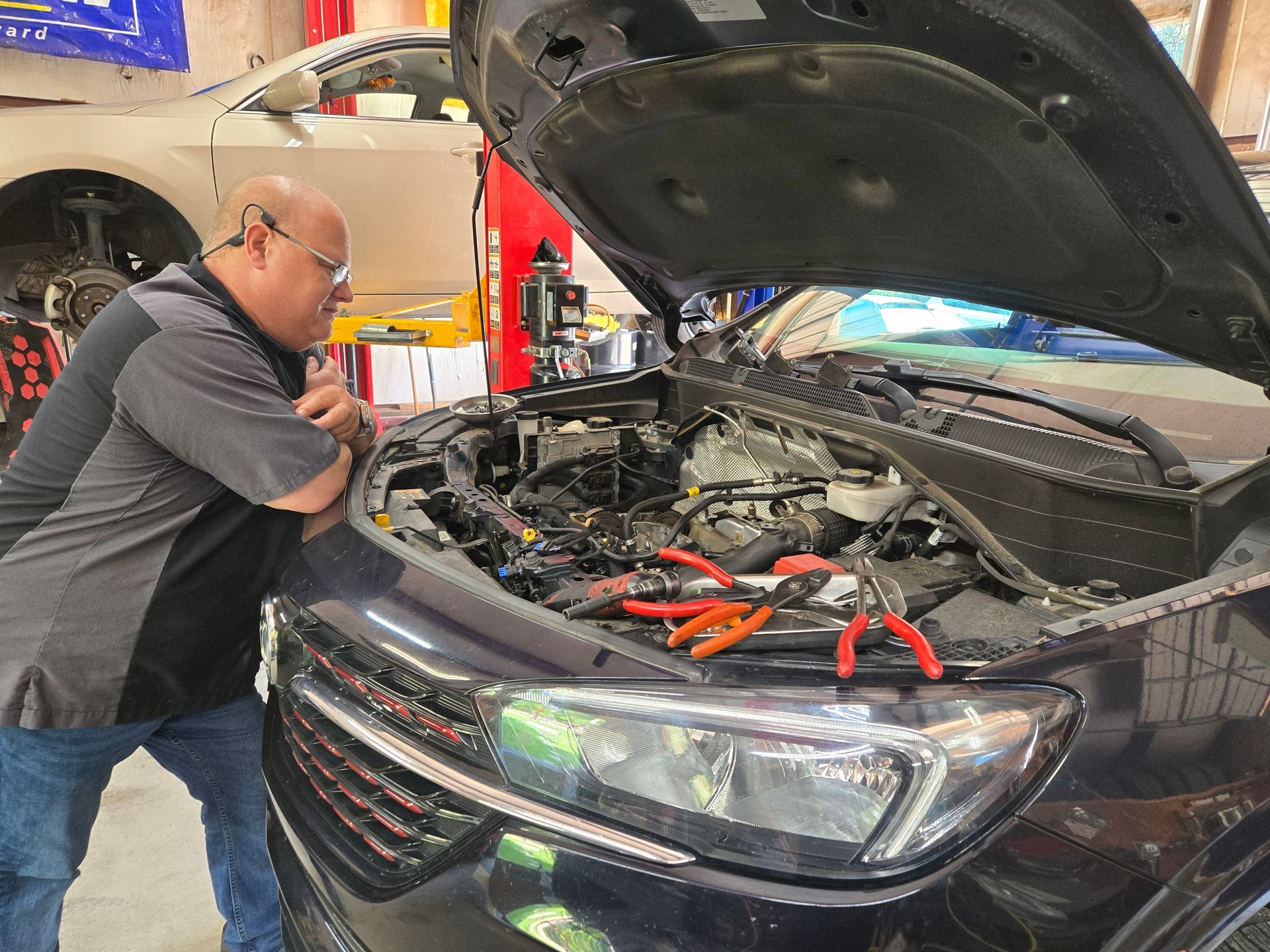
7. Engine Bay Evaluation
Under the hood, we examine:
- Belt condition
- Hose condition
- Battery health
- Signs of overheating
- Fluid contamination
- Aftermarket modifications
We look for warning signs that indicate neglect or shortcuts.
8. Computer Diagnostics
Modern vehicles store information in their computer systems.
We:
- Scan for stored codes
- Check for pending codes
- Look for recently cleared codes
- Verify system readiness monitors
- Sometimes sellers clear warning lights before selling.
We know how to check.
9. Road Test Evaluation
A controlled road test allows us to assess:
- Transmission shifting
- Engine performance
- Steering response
- Brake feel
- Vibration or noise
- Warning lights
But remember — road tests complement lift inspections. They don’t replace them.
Why Thoroughness Protects You
Our inspections aren’t designed to scare you out of a vehicle. They’re designed to answer one question:
What am I truly buying?
Sometimes the answer is:
“This is a great vehicle. Just minor maintenance ahead.”
Other times it’s:
“You need to negotiate. There are repairs coming.”
And occasionally:
“This one may not be the right choice.”
The power is in the information.
How a Pre-Purchase Inspection Saves You Money
Even when a vehicle needs work, that doesn’t mean you shouldn’t buy it.
It means:
- You negotiate accordingly.
- You plan for repairs.
- You avoid surprise emergencies.
An inspection can prevent:
$3,000 brake and suspension repairs
$5,000 transmission surprises
Safety risks to your family
That’s not fear-based. That’s math.
The Emotional Side of Buying a Vehicle
Buying a car isn’t just a transaction. It’s:
A teenager’s first vehicle
A growing family’s upgrade
A business investment
A replacement after an accident
You want to feel confident — not anxious. At Rock’s, we see ourselves as your guide. You’re the hero trying to make a smart decision.
We simply provide the flashlight.
Louisiana Reality: Why This Matters Here
Between:
Heat
Humidity
Flood exposure
Heavy rainfall
Road conditions
Vehicles in Louisiana endure stress many buyers underestimate.
Corrosion.
Electrical issues.
Hidden water damage.
A thorough lift inspection is not optional here — it’s wise.
What Happens After the Inspection?
We:
- Document findings with photos
- Provide clear explanations
- Answer your questions
- Give you realistic repair estimates
No pressure.
No obligation.
No scare tactics.
Just clarity.
Peace of Mind Is the Real Purchase
At the end of the day, what you’re really buying isn’t a car. It’s:
Reliability
Safety
Fewer surprises
Confidence on the road
A pre-purchase inspection protects all of that.
Frequently Asked Questions (FAQ)
1. How long does a pre-purchase inspection take?
Typically 1–2 hours depending on the vehicle.
2. Can I schedule this before I buy?
Yes — and you absolutely should.
3. What if the seller doesn’t want me to inspect it?
That’s a red flag.
4. Do you provide repair estimates?
Yes, so you can negotiate or plan.
5. Is this only for dealership purchases?
No — private sales especially need inspections.
6. Can you inspect newer vehicles?
Absolutely. Even low-mileage cars can hide issues.
7. What if the vehicle passes?
That’s great! Now you buy with confidence.
Final Thought
You wouldn’t buy a house without an inspection.
Why buy a vehicle without lifting it?
At Rock’s Tire & Auto, we’re here to help you see what others don’t — so you can drive away confident, informed, and protected.
If you’re considering a purchase, call us first.
Let’s make sure the vehicle you’re bringing home is worthy of the people riding inside it. 💙🚗
Explore expert battery & electrical repair tips with Rock's Tire & Auto in Covington, LA. Enhance your car's performance today! Schedule an online appointment now.
Expert preventative maintenance in Covington at Rock's Tire & Auto. Enhance vehicle lifespan and performance with our skilled team. Schedule an online appointment now!
Optimize your vehicle's performance with expert tire services and wheel alignment at Rock's Tire & Auto in Covington, LA. Visit us today!
Discover top-notch brake repair services at Rock's Tire & Auto in Covington, LA. Ensure safe journeys with our expert care. Visit us today!

Summary Oil changes are one of the simplest — and most misunderstood — maintenance services your vehicle needs. While some advertisements promote extended oil change intervals of 7,500, 10,000, or even 15,000 miles, real-world driving conditions tell a different story. For most drivers, especially those who deal with short trips, stop-and-go traffic, heat, humidity, towing, or idling, changing your oil every 5,000 miles is a smart and preventative approach to protecting your engine. Fresh oil lubricates, cools, cleans, and protects your engine’s internal components. As oil ages, it breaks down, collects contaminants, and loses its ability to perform these vital functions. Waiting too long between oil changes increases wear, reduces fuel efficiency, and can lead to expensive engine damage over time. In this blog, we’ll break down exactly what motor oil does, why 5,000 miles is a safe and practical interval for most drivers, the risks of stretching oil changes too far, and how this simple service protects one of the most expensive components in your vehicle — your engine. What Motor Oil Actually Does for Your Engine Many people think oil simply “keeps things slippery.” While lubrication is important, motor oil does far more than that. First, oil lubricates moving metal parts. Your engine contains thousands of precisely machined components moving at high speeds. Pistons move up and down thousands of times per minute. Crankshafts spin. Valves open and close. Without a thin protective film of oil between these surfaces, metal would grind against metal and quickly destroy the engine. Second, oil helps regulate temperature. Combustion inside your engine creates extreme heat. Oil absorbs and carries away some of that heat, helping prevent overheating and thermal stress. Third, oil cleans. As fuel burns, it produces byproducts like carbon deposits. Tiny metal particles also wear off internal components over time. Oil suspends these contaminants and carries them to the oil filter so they don’t accumulate inside the engine. Fourth, oil protects against corrosion. Additives in motor oil help prevent rust and chemical breakdown inside the engine. Finally, oil cushions engine components. It helps absorb shock between moving parts, reducing noise and wear. When oil is fresh, it performs all of these functions efficiently. When oil is old and degraded, it does none of them well. Why 5,000 Miles Is a Practical Standard You’ve likely seen commercials suggesting oil changes can go much longer than 5,000 miles. While that may be technically possible under ideal conditions, most drivers do not operate their vehicles under ideal conditions. Short trips are one of the biggest reasons oil degrades faster. When you drive only a few miles at a time, your engine may not fully warm up. Moisture and fuel dilution can build up in the oil, reducing its effectiveness. Stop-and-go traffic is another factor. Idling, braking, and accelerating repeatedly place stress on the engine and break down oil more quickly. Hot climates accelerate oil degradation. Heat causes oil to thin and oxidize faster, reducing its protective properties. Towing, hauling, or carrying heavy loads increases engine strain. More strain means more heat and more contamination. Even modern engines with synthetic oil benefit from regular service. Synthetic oil resists breakdown better than conventional oil, but it still collects contaminants and still loses additive strength over time. The 5,000-mile interval is a conservative, protective approach that accounts for real-world driving conditions. It creates a safety buffer that protects your engine long-term rather than pushing limits. What Happens When You Wait Too Long Stretching oil change intervals may save a small amount of money in the short term, but it can cost significantly more in the long run. As oil ages, it thickens and forms sludge. Sludge restricts oil flow, starving critical engine components of lubrication. Worn-out oil loses its ability to protect against friction. Increased friction accelerates wear on bearings, camshafts, and piston rings. Dirty oil reduces fuel efficiency. Engines have to work harder when lubrication is compromised. Extended intervals can also clog oil passages and damage timing components, especially in modern engines that rely on precise oil pressure for variable valve timing systems. Worst case scenario? Complete engine failure. An engine replacement can cost thousands of dollars. Compared to that, regular oil changes are one of the most affordable ways to protect your investment. The Role of the Oil Filter Changing oil isn’t just about draining fluid. The oil filter plays a crucial role. The filter captures dirt, metal particles, and combustion byproducts. Over time, it becomes saturated. A clogged filter reduces oil flow or bypasses contaminants back into circulation. Replacing the oil without replacing the filter is like taking a shower and putting dirty clothes back on. At each 5,000-mile service, both oil and filter should be replaced to ensure proper protection. Modern Engines Are Not Immune Some drivers believe newer vehicles don’t need oil changes as frequently. While modern engines are more efficient, they are also more complex. Many newer engines use turbochargers. Turbos spin at extremely high speeds and rely heavily on clean oil for cooling and lubrication. Dirty oil can quickly damage turbo bearings. Direct-injection engines can introduce fuel dilution into oil, reducing its effectiveness. Variable valve timing systems depend on clean oil flowing through tiny passages. Sludge or contamination can cause performance issues. Modern engines often have tighter tolerances than older engines. This means they are less forgiving when maintenance is neglected. Regular 5,000-mile oil changes help ensure these advanced systems operate properly. The Cost Comparison: Oil Changes vs. Engine Repairs Let’s break it down practically. An oil change every 5,000 miles might cost a few hundred dollars per year, depending on how much you drive. Major engine repairs can cost thousands — sometimes more than the value of the vehicle. Routine oil service is preventative maintenance. It protects resale value. It reduces breakdown risk. It extends engine life. When you consider the lifespan of a vehicle — often 150,000 to 250,000 miles — regular oil changes significantly increase the odds of reaching the higher end of that range. Oil Is the Lifeblood of Your Vehicle You wouldn’t skip blood circulation in your body. Oil functions the same way in your engine. When it’s clean and flowing properly, everything operates smoothly. When it’s dirty or degraded, every component suffers. That is why 5,000 miles is not an arbitrary number. It’s a practical interval designed to protect the engine from gradual wear that happens silently over time. You may not notice immediate damage from stretching intervals once or twice. But engines rarely fail suddenly without warning. They wear down slowly. Consistent maintenance builds reliability. Signs Your Oil May Be Overdue Even if you track mileage, it’s helpful to recognize warning signs. Dark, gritty oil on the dipstick. Engine knocking or ticking sounds. Decreased fuel economy. Rough idling. Oil warning lights. However, waiting for symptoms is not ideal. Oil maintenance works best when it is preventative, not reactive. The Environmental Perspective Some drivers worry about frequent oil changes impacting the environment. Properly recycled oil is re-refined and reused. Used oil is one of the most recycled products worldwide. A well-maintained engine also runs more efficiently, producing fewer emissions. Regular oil changes contribute to cleaner engine operation and better fuel economy. Peace of Mind Matters One overlooked benefit of 5,000-mile oil changes is peace of mind. Knowing your vehicle is properly maintained reduces stress during road trips, daily commutes, and unexpected travel. It builds a relationship between you and your service provider. Routine visits allow technicians to spot small issues before they become major problems. Oil changes often include multi-point inspections that catch worn belts, leaks, brake wear, and tire issues early. It’s not just about oil. It’s about consistent vehicle health. Frequently Asked Questions How do I know if 5,000 miles is right for my car? For most drivers under typical real-world conditions, 5,000 miles is a safe, preventative interval. Severe driving conditions may require even shorter intervals. What if my manufacturer recommends 7,500 or 10,000 miles? Manufacturer intervals are often based on ideal conditions. If you drive short trips, in heavy traffic, in hot climates, or tow frequently, shorter intervals provide added protection. Is synthetic oil good for 10,000 miles? Synthetic oil resists breakdown better than conventional oil, but it still accumulates contaminants. Many technicians recommend 5,000-mile intervals even with synthetic oil for long-term engine health. Will skipping one oil change ruin my engine? One delay may not cause immediate failure, but repeated delays increase wear over time. Why does my oil look dirty even shortly after a change? Oil darkens as it collects contaminants. Dark color alone doesn’t always mean it’s bad, but mileage and condition matter. Can I rely on my oil life monitor? Oil life monitors estimate degradation based on algorithms. They do not directly measure oil condition. Using mileage as a guideline provides consistency. What happens if I rarely drive my car? Even low-mileage vehicles should have oil changed at least once or twice per year. Oil degrades over time, not just miles. Does frequent oil changing harm the engine? No. Fresh oil protects the engine. There is no harm in changing oil more frequently within reasonable intervals. Final Thoughts Changing your oil every 5,000 miles is not about overservicing. It is about protecting one of the most complex and expensive components in your vehicle. Engines are engineered marvels, but they depend on clean oil to survive. Routine maintenance is always less expensive than repairs. Consistency prevents costly surprises. And when you care for your vehicle proactively, it returns the favor with reliability. Five thousand miles may seem frequent. But when measured against the lifespan of your engine, it is a small investment with a major payoff.