Brake Repair Explained: What Every Driver Should Know Before Problems Start

January 9, 2026

Brakes are one of those systems most drivers rely on every single day but rarely think about until something feels wrong. At Rock’s Tire & Auto in Covington, LA, we see firsthand how small brake concerns can quietly turn into serious safety risks when they’re ignored. Understanding how your braking system works, what warning signs to watch for, and how proper maintenance protects both your vehicle and your wallet can make a real difference in your driving experience.


In this guide, we’re breaking down brake repair in a practical, easy-to-understand way. Whether you’re commuting daily, heading out on weekend drives, or managing a growing family’s vehicles, this article will help you make informed decisions about brake care and know when it’s time to take action.


How Your Brake System Really Works


Your braking system is more than just brake pads pressing against rotors. It’s a carefully balanced system designed to convert motion into heat and slow your vehicle safely and smoothly. When you press the brake pedal, hydraulic pressure moves brake fluid through lines to activate calipers, which then clamp the brake pads against the rotors. That friction is what brings your car to a stop.


Modern vehicles add even more complexity with anti-lock braking systems, electronic brake force distribution, and stability control. These systems rely on sensors and control modules that must work together seamlessly. If one component begins to wear or malfunction, the entire system’s effectiveness can be compromised.


That’s why brake repair isn’t just about replacing parts. It’s about diagnosing how every component is performing under real-world driving conditions and ensuring everything functions as designed.


Common Brake Problems Drivers Often Overlook


Many brake issues don’t start with loud grinding or a brake warning light. They often begin subtly, which is why they’re easy to dismiss. At Rock’s Tire & Auto in Covington, LA, we regularly see drivers surprised to learn how long their vehicle has been signaling a problem.


Some of the most common early warning signs include a soft or spongy brake pedal, slight vibrations when braking, or longer stopping distances. Squeaking or squealing noises can indicate worn pads, while pulling to one side may point to uneven wear or caliper issues. Even a steering wheel shake during braking can signal warped rotors.


Ignoring these signs doesn’t just increase repair costs. It reduces your vehicle’s ability to stop safely, especially during sudden braking or wet road conditions. Catching issues early allows for simpler, more cost-effective repairs.


Why Brake Wear Isn’t the Same for Every Driver


Brake wear depends heavily on how and where you drive. Stop-and-go traffic, frequent short trips, towing, and hilly terrain all accelerate brake wear. Drivers in Covington, LA often experience varied driving conditions that place different demands on braking systems, from daily commuting to longer highway travel.


Vehicle weight, driving habits, and even brake pad material play a role. Aggressive braking generates more heat, which wears components faster. Riding the brakes downhill can overheat rotors and reduce braking efficiency. That’s why two vehicles of the same make and model can have completely different brake service timelines.


Understanding your driving patterns helps set realistic expectations for brake maintenance and allows us to recommend service intervals that actually match how you use your vehicle.


The Importance of Professional Brake Inspections


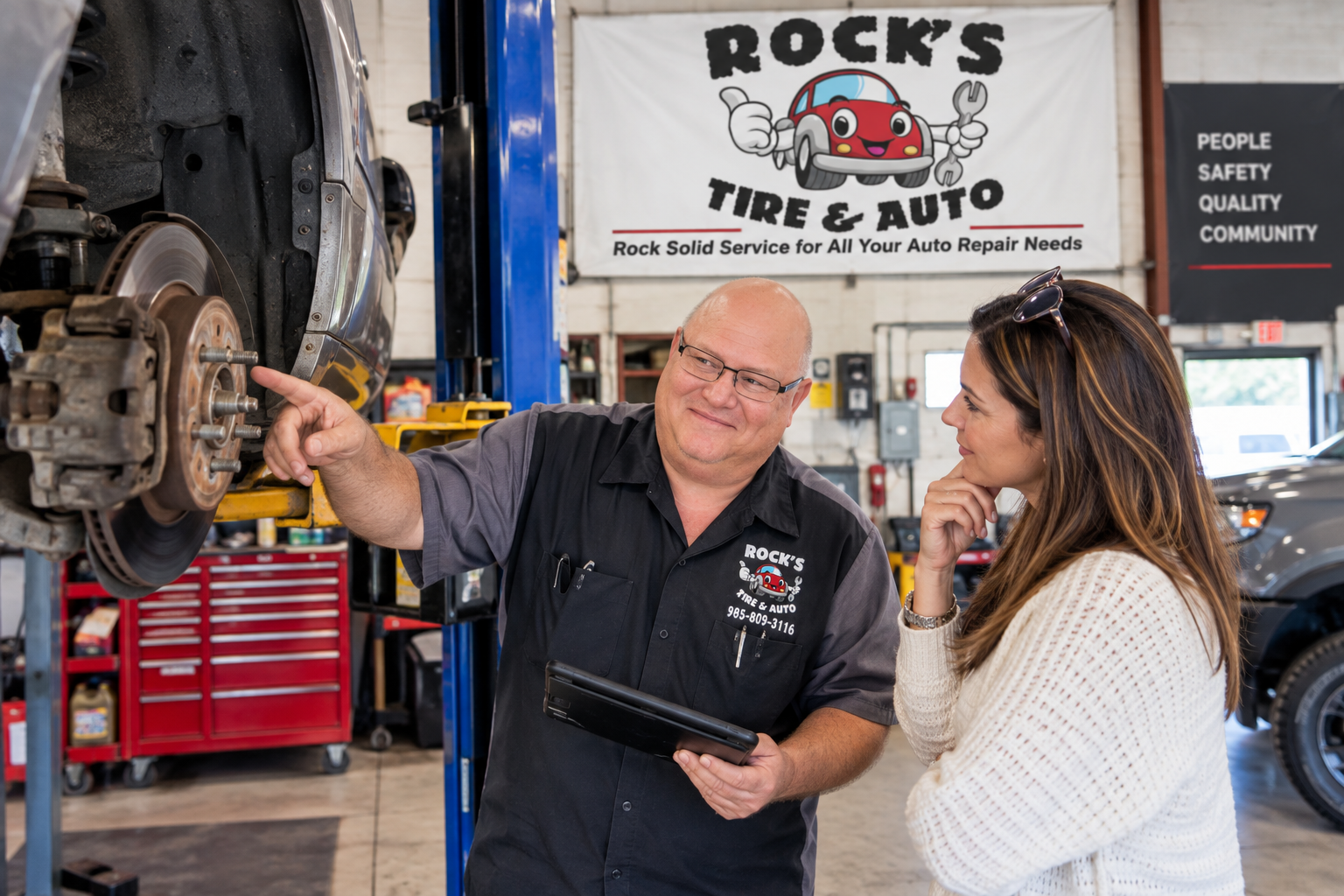
Brake inspections go far beyond a quick glance at pad thickness. A professional inspection evaluates pad wear, rotor condition, caliper operation, brake fluid quality, and hydraulic pressure. It also checks for uneven wear patterns that could indicate suspension or alignment issues.


At Rock’s Tire & Auto in Covington, LA, we approach brake inspections with a safety-first mindset. We believe drivers should understand what’s happening with their vehicle, not feel pressured or confused. A thorough inspection gives you clarity, allowing you to plan repairs before they become urgent.


Routine inspections also help avoid unnecessary replacements. Sometimes a brake noise isn’t worn pads at all, but hardware that needs adjustment or lubrication. Proper diagnostics save time, money, and frustration.


Brake Fluid: The Most Ignored Part of Brake Repair


Brake fluid plays a critical role in how your brakes perform, yet it’s often overlooked. Over time, brake fluid absorbs moisture, which lowers its boiling point and reduces braking efficiency. Moisture can also lead to internal corrosion in brake lines and components.


Old or contaminated brake fluid can cause a soft pedal, inconsistent braking, or reduced stopping power during heavy use. Flushing and replacing brake fluid at recommended intervals helps maintain consistent hydraulic pressure and protects internal components from damage.


This simple maintenance step can significantly extend the life of your braking system and improve overall safety, especially in high-stress braking situations.


Quality Parts Matter More Than Most Drivers Realize


Not all brake parts are created equal. Brake pads vary in material, durability, noise levels, and heat resistance. Rotors differ in composition and machining quality. Using low-quality components may save money upfront but often leads to faster wear, increased noise, and reduced performance.


We believe brake repair should be done with parts that match your vehicle’s design and driving needs. The right combination of pads and rotors ensures quiet operation, smooth braking, and dependable stopping power.


Choosing quality components also protects other parts of the system. Properly matched parts reduce vibration, heat buildup, and uneven wear, helping your brakes perform consistently over time.


Preventive Brake Maintenance Saves Money Long Term


Preventive brake care isn’t about replacing parts early. It’s about maintaining the system so parts wear evenly and predictably. Cleaning and lubricating brake hardware, monitoring fluid condition, and addressing small issues early can prevent major repairs later.


For drivers in Covington, LA, regular brake maintenance is especially important due to varied road conditions and seasonal driving demands. Staying proactive reduces the risk of sudden failures and helps maintain confidence behind the wheel.


Preventive care also improves resale value. A well-maintained braking system signals responsible ownership and reduces concerns for future buyers.


When Brake Repair Becomes a Safety Priority


Some brake issues require immediate attention. Grinding noises, warning lights, burning smells, or a brake pedal that sinks to the floor are signs that driving should be avoided until the vehicle is inspected. These symptoms indicate advanced wear or hydraulic failure that can compromise safety.


Waiting in these situations doesn’t just increase repair costs. It puts you and others at risk. Understanding when brake repair is urgent helps drivers make responsible decisions and avoid dangerous situations.


We always encourage addressing brake concerns sooner rather than later. Peace of mind on the road starts with knowing your vehicle can stop when it needs to.


Choosing the Right Shop for Brake Repair


Brake repair requires experience, precision, and honesty. A trustworthy shop explains what your vehicle needs, why it needs it, and how the repair improves safety and performance. Clear communication and proper diagnostics should always come before any repair recommendation.


At Rock’s Tire & Auto in Covington, LA, we take pride in helping drivers understand their vehicles. We believe informed drivers make better decisions and feel more confident about their repairs. That approach builds long-term trust and keeps vehicles operating safely year after year.


Final Thoughts on Brake Repair


Brakes are one of the most critical safety systems on your vehicle, and caring for them shouldn’t be left to guesswork. Understanding how they work, recognizing warning signs, and committing to preventive maintenance empowers you to protect yourself, your passengers, and everyone else on the road.


Brake repair isn’t just about fixing a problem. It’s about preserving confidence, control, and peace of mind every time you drive. With the right knowledge and professional support, staying safe behind the wheel becomes a natural part of vehicle ownership.

By Rock's Tire & Auto June 11, 2026
Explore expert battery & electrical repair tips with Rock's Tire & Auto in Covington, LA. Enhance your car's performance today! Schedule an online appointment now.
By Rock's Tire & Auto May 14, 2026
Expert preventative maintenance in Covington at Rock's Tire & Auto. Enhance vehicle lifespan and performance with our skilled team. Schedule an online appointment now!
By Rock Molina May 8, 2026
Here’s How to Keep More Cash in Your Tank
By Rock's Tire & Auto April 16, 2026
Optimize your vehicle's performance with expert tire services and wheel alignment at Rock's Tire & Auto in Covington, LA. Visit us today!
By Rock Molina April 15, 2026
The body content of your post goes here. To edit this text, click on it and delete this default text and start typing your own or paste your own from a different source.
By Rock Molina April 7, 2026
The body content of your post goes here. To edit this text, click on it and delete this default text and start typing your own or paste your own from a different source.
By Angie Molina March 24, 2026
The body content of your post goes here. To edit this text, click on it and delete this default text and start typing your own or paste your own from a different source.
By Rock's Tire & Auto March 19, 2026
Discover top-notch brake repair services at Rock's Tire & Auto in Covington, LA. Ensure safe journeys with our expert care. Visit us today!
By Rock Molina February 24, 2026
Summary Oil changes are one of the simplest — and most misunderstood — maintenance services your vehicle needs. While some advertisements promote extended oil change intervals of 7,500, 10,000, or even 15,000 miles, real-world driving conditions tell a different story. For most drivers, especially those who deal with short trips, stop-and-go traffic, heat, humidity, towing, or idling, changing your oil every 5,000 miles is a smart and preventative approach to protecting your engine. Fresh oil lubricates, cools, cleans, and protects your engine’s internal components. As oil ages, it breaks down, collects contaminants, and loses its ability to perform these vital functions. Waiting too long between oil changes increases wear, reduces fuel efficiency, and can lead to expensive engine damage over time. In this blog, we’ll break down exactly what motor oil does, why 5,000 miles is a safe and practical interval for most drivers, the risks of stretching oil changes too far, and how this simple service protects one of the most expensive components in your vehicle — your engine. What Motor Oil Actually Does for Your Engine Many people think oil simply “keeps things slippery.” While lubrication is important, motor oil does far more than that. First, oil lubricates moving metal parts. Your engine contains thousands of precisely machined components moving at high speeds. Pistons move up and down thousands of times per minute. Crankshafts spin. Valves open and close. Without a thin protective film of oil between these surfaces, metal would grind against metal and quickly destroy the engine. Second, oil helps regulate temperature. Combustion inside your engine creates extreme heat. Oil absorbs and carries away some of that heat, helping prevent overheating and thermal stress. Third, oil cleans. As fuel burns, it produces byproducts like carbon deposits. Tiny metal particles also wear off internal components over time. Oil suspends these contaminants and carries them to the oil filter so they don’t accumulate inside the engine. Fourth, oil protects against corrosion. Additives in motor oil help prevent rust and chemical breakdown inside the engine. Finally, oil cushions engine components. It helps absorb shock between moving parts, reducing noise and wear. When oil is fresh, it performs all of these functions efficiently. When oil is old and degraded, it does none of them well. Why 5,000 Miles Is a Practical Standard You’ve likely seen commercials suggesting oil changes can go much longer than 5,000 miles. While that may be technically possible under ideal conditions, most drivers do not operate their vehicles under ideal conditions. Short trips are one of the biggest reasons oil degrades faster. When you drive only a few miles at a time, your engine may not fully warm up. Moisture and fuel dilution can build up in the oil, reducing its effectiveness. Stop-and-go traffic is another factor. Idling, braking, and accelerating repeatedly place stress on the engine and break down oil more quickly. Hot climates accelerate oil degradation. Heat causes oil to thin and oxidize faster, reducing its protective properties. Towing, hauling, or carrying heavy loads increases engine strain. More strain means more heat and more contamination. Even modern engines with synthetic oil benefit from regular service. Synthetic oil resists breakdown better than conventional oil, but it still collects contaminants and still loses additive strength over time. The 5,000-mile interval is a conservative, protective approach that accounts for real-world driving conditions. It creates a safety buffer that protects your engine long-term rather than pushing limits. What Happens When You Wait Too Long Stretching oil change intervals may save a small amount of money in the short term, but it can cost significantly more in the long run. As oil ages, it thickens and forms sludge. Sludge restricts oil flow, starving critical engine components of lubrication. Worn-out oil loses its ability to protect against friction. Increased friction accelerates wear on bearings, camshafts, and piston rings. Dirty oil reduces fuel efficiency. Engines have to work harder when lubrication is compromised. Extended intervals can also clog oil passages and damage timing components, especially in modern engines that rely on precise oil pressure for variable valve timing systems. Worst case scenario? Complete engine failure. An engine replacement can cost thousands of dollars. Compared to that, regular oil changes are one of the most affordable ways to protect your investment. The Role of the Oil Filter Changing oil isn’t just about draining fluid. The oil filter plays a crucial role. The filter captures dirt, metal particles, and combustion byproducts. Over time, it becomes saturated. A clogged filter reduces oil flow or bypasses contaminants back into circulation. Replacing the oil without replacing the filter is like taking a shower and putting dirty clothes back on. At each 5,000-mile service, both oil and filter should be replaced to ensure proper protection. Modern Engines Are Not Immune Some drivers believe newer vehicles don’t need oil changes as frequently. While modern engines are more efficient, they are also more complex. Many newer engines use turbochargers. Turbos spin at extremely high speeds and rely heavily on clean oil for cooling and lubrication. Dirty oil can quickly damage turbo bearings. Direct-injection engines can introduce fuel dilution into oil, reducing its effectiveness. Variable valve timing systems depend on clean oil flowing through tiny passages. Sludge or contamination can cause performance issues. Modern engines often have tighter tolerances than older engines. This means they are less forgiving when maintenance is neglected. Regular 5,000-mile oil changes help ensure these advanced systems operate properly. The Cost Comparison: Oil Changes vs. Engine Repairs Let’s break it down practically. An oil change every 5,000 miles might cost a few hundred dollars per year, depending on how much you drive. Major engine repairs can cost thousands — sometimes more than the value of the vehicle. Routine oil service is preventative maintenance. It protects resale value. It reduces breakdown risk. It extends engine life. When you consider the lifespan of a vehicle — often 150,000 to 250,000 miles — regular oil changes significantly increase the odds of reaching the higher end of that range. Oil Is the Lifeblood of Your Vehicle You wouldn’t skip blood circulation in your body. Oil functions the same way in your engine. When it’s clean and flowing properly, everything operates smoothly. When it’s dirty or degraded, every component suffers. That is why 5,000 miles is not an arbitrary number. It’s a practical interval designed to protect the engine from gradual wear that happens silently over time. You may not notice immediate damage from stretching intervals once or twice. But engines rarely fail suddenly without warning. They wear down slowly. Consistent maintenance builds reliability. Signs Your Oil May Be Overdue Even if you track mileage, it’s helpful to recognize warning signs. Dark, gritty oil on the dipstick. Engine knocking or ticking sounds. Decreased fuel economy. Rough idling. Oil warning lights. However, waiting for symptoms is not ideal. Oil maintenance works best when it is preventative, not reactive. The Environmental Perspective Some drivers worry about frequent oil changes impacting the environment. Properly recycled oil is re-refined and reused. Used oil is one of the most recycled products worldwide. A well-maintained engine also runs more efficiently, producing fewer emissions. Regular oil changes contribute to cleaner engine operation and better fuel economy. Peace of Mind Matters One overlooked benefit of 5,000-mile oil changes is peace of mind. Knowing your vehicle is properly maintained reduces stress during road trips, daily commutes, and unexpected travel. It builds a relationship between you and your service provider. Routine visits allow technicians to spot small issues before they become major problems. Oil changes often include multi-point inspections that catch worn belts, leaks, brake wear, and tire issues early. It’s not just about oil. It’s about consistent vehicle health. Frequently Asked Questions How do I know if 5,000 miles is right for my car? For most drivers under typical real-world conditions, 5,000 miles is a safe, preventative interval. Severe driving conditions may require even shorter intervals. What if my manufacturer recommends 7,500 or 10,000 miles? Manufacturer intervals are often based on ideal conditions. If you drive short trips, in heavy traffic, in hot climates, or tow frequently, shorter intervals provide added protection. Is synthetic oil good for 10,000 miles? Synthetic oil resists breakdown better than conventional oil, but it still accumulates contaminants. Many technicians recommend 5,000-mile intervals even with synthetic oil for long-term engine health. Will skipping one oil change ruin my engine? One delay may not cause immediate failure, but repeated delays increase wear over time. Why does my oil look dirty even shortly after a change? Oil darkens as it collects contaminants. Dark color alone doesn’t always mean it’s bad, but mileage and condition matter. Can I rely on my oil life monitor? Oil life monitors estimate degradation based on algorithms. They do not directly measure oil condition. Using mileage as a guideline provides consistency. What happens if I rarely drive my car? Even low-mileage vehicles should have oil changed at least once or twice per year. Oil degrades over time, not just miles. Does frequent oil changing harm the engine? No. Fresh oil protects the engine. There is no harm in changing oil more frequently within reasonable intervals. Final Thoughts Changing your oil every 5,000 miles is not about overservicing. It is about protecting one of the most complex and expensive components in your vehicle. Engines are engineered marvels, but they depend on clean oil to survive. Routine maintenance is always less expensive than repairs. Consistency prevents costly surprises. And when you care for your vehicle proactively, it returns the favor with reliability. Five thousand miles may seem frequent. But when measured against the lifespan of your engine, it is a small investment with a major payoff.
See all blogs >