What you need to know about recalls!
What They Mean, What You Should Do & What GM’s 6.2L Recall Means for Owners
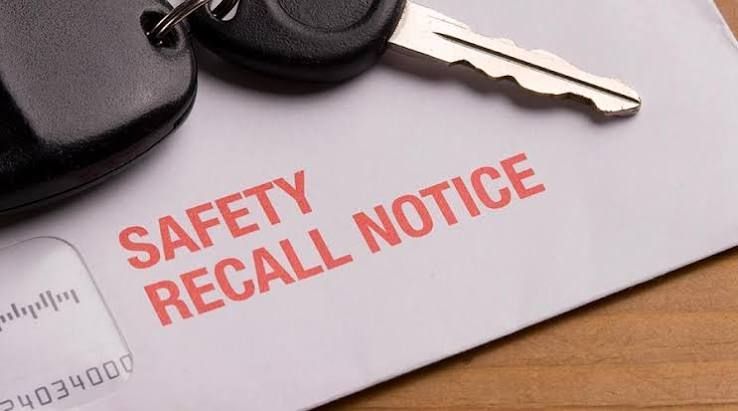
Vehicle Recalls:
By Angie at Rock’s Tire & Auto | Covington, Louisiana
You’re driving down the road, everything seems normal, and then you get a notification:
“Your vehicle has been recalled.”
Cue the panic.
Is your vehicle unsafe?
Can you still drive it?
Is it going to cost you thousands of dollars?
Do you have to take it to the dealership?
And what happens if you bought the vehicle used?
If you’ve ever had those questions, you’re not alone.
Vehicle recalls can be confusing, and some of them involve problems that are genuinely serious. Others may involve a relatively small issue that needs to be corrected before it becomes a bigger problem.
The important thing is not to ignore a recall simply because your vehicle seems to be running fine.
At Rock’s Tire & Auto, we believe you shouldn't need to be a mechanic to understand what’s happening with your vehicle. Our job is to help you understand your car, explain your options in plain English, and give you the information you need to make good decisions.
So let's talk about recalls—including the significant General Motors recall involving certain 2021–2024 vehicles equipped with the 6.2L L87 V8 engine—and what you should know if you own one.
First Things First: What Is a Vehicle Recall?
A vehicle safety recall happens when an automaker or the National Highway Traffic Safety Administration (NHTSA) determines that a vehicle has a safety-related defect or doesn't meet a federal safety standard.
In other words, there is a problem that could potentially create a safety risk.
A recall doesn't necessarily mean that your vehicle is currently broken.
It also doesn't mean that every vehicle of the same year, make and model is affected.
Instead, a recall identifies a specific problem affecting specific vehicles, components, production periods or configurations.
That's why your VIN matters.
Your VIN—or Vehicle Identification Number—is the unique 17-character identification number assigned to your vehicle. You can usually find it on the driver's side of the dashboard where it meets the windshield.
You can use that VIN to determine whether your specific vehicle has an open recall.
NHTSA's recall lookup tool can show whether your vehicle has an unrepaired safety recall.
And here's something many people don't realize:
A recall doesn't expire.
NHTSA says that once a vehicle has been recalled, the recall doesn't expire.
So if you bought a used vehicle and the previous owner never had a recall repaired, that issue can still be waiting for you.
Are Recall Repairs Free?
For safety recalls, the manufacturer generally provides the required recall remedy at no charge through its dealership network.
NHTSA specifically advises vehicle owners with open recalls to contact their manufacturer's dealership to schedule the free repair.
That doesn't mean every repair your vehicle might need is free.
It means the specific repair associated with the recall is generally covered under the recall.
For example, your vehicle might have a recall for a defective component, but while you're having that issue addressed, the technician could discover that your brakes, tires or battery also need attention. Those unrelated repairs aren't automatically covered by the recall.
That's where having someone you trust can be helpful.
At Rock's, we're not here to sell you something simply because your vehicle is in the shop.
We're here to help you understand what your vehicle needs—and just as importantly, what it doesn't need.
Do Recalls Mean My Vehicle Is Unsafe to Drive?
This is where things get a little more complicated.
Sometimes yes. Sometimes no.
Every recall is different.
Some recalls come with instructions telling owners to stop driving the vehicle immediately.
Others allow you to continue driving while you arrange the repair.
Some involve problems that may develop over time.
Others involve a risk that could happen suddenly.
That's why you should always read the recall notice carefully and follow the manufacturer's safety instructions.
NHTSA specifically recommends following any instructions from the automaker, including warnings such as “do not drive” or “park outside.”
If you're unsure what a recall means for your particular vehicle, don't guess.
Ask.
That's what we're here for.
Recall vs. Service Bulletin: They're Not the Same Thing
This is another area where vehicle owners can get confused.
You may hear about something called a Technical Service Bulletin, or TSB.
A TSB is not necessarily a recall.
A manufacturer might issue a service bulletin to tell technicians about a known problem, an updated repair procedure, a revised part or a diagnostic process.
But a TSB doesn't automatically mean the manufacturer is required to repair the problem for free.
A safety recall is different.
A recall is specifically tied to a safety defect or failure to meet a federal safety standard, and the manufacturer is responsible for providing the recall remedy under the applicable recall program.
So if someone tells you, “There's a bulletin on your car,” don't automatically assume that means your vehicle has a recall.
And don't assume it doesn't matter, either.
Know what you're dealing with.
Why Are We Talking About GM's 6.2L Recall?
Because this is a great example of why vehicle owners should pay attention to recalls—and why the story doesn't always end when the recall is announced.
In 2025, General Motors recalled nearly 600,000 vehicles equipped with its 6.2-liter L87 V8 engine because certain engine components could have manufacturing defects that could lead to engine damage and failure.
The affected vehicles in the original recall include certain:
- 2021–2024 Chevrolet Silverado 1500
- 2021–2024 Chevrolet Tahoe
- 2021–2024 Chevrolet Suburban
- 2021–2024 GMC Sierra 1500
- 2021–2024 GMC Yukon
- 2021–2024 GMC Yukon XL
- 2021–2024 Cadillac Escalade
- 2021–2024 Cadillac Escalade ESV
But—and this is important—not every vehicle in those model years is affected.
The recall applies to vehicles equipped with the 6.2L V8 L87 engine within the specified production population.
That's why checking your VIN is so important.
So What Is Going Wrong With the GM 6.2L Engine?
Let's put the mechanic-speak aside for a minute.
Inside your engine are many moving parts that have to work together precisely.
Two of the important components involved in this recall are the crankshaft and connecting rods.
You don't need to know exactly how they work to understand the important part:
If those components are damaged, the engine can suffer catastrophic damage and fail.
And if an engine fails while you're driving, the vehicle can lose propulsion.
That means the vehicle can stop providing power when you're expecting it to keep moving—which creates a potential crash risk.
GM's recall documents state that manufacturing defects involving the connecting rod and/or crankshaft components could lead to engine damage and engine failure, potentially resulting in loss of propulsion.
That's not a “we'll get around to it eventually” kind of problem.
It's something you want to understand and address.
What Might an Owner Notice?
One of the frustrating things about mechanical problems is that your vehicle may not give you a convenient warning that says:
“Hey! My engine is about to have a very bad day.”
Instead, you might notice symptoms.
Potential warning signs can include:
- Unusual engine knocking
- Banging or abnormal engine noises
- Check-engine light
- Rough running
- Hesitation
- Loss of power
- Engine performance that suddenly changes
- A vehicle that won't start
Of course, these symptoms can be caused by many different problems.
A knocking noise doesn't automatically mean your engine has the GM L87 issue.
And a check-engine light doesn't automatically mean your engine is about to fail.
But when something changes in the way your vehicle sounds, feels or drives, don't ignore it.
Your vehicle is usually pretty good at telling you when something isn't right.
You just have to listen.
What Was GM's Recall Solution?
This is where the GM recall gets particularly interesting.
GM's recall remedy involves inspecting the engine.
If the engine fails the required inspection, the engine is replaced.
If the engine passes the inspection, the vehicle receives an updated oil service.
That includes changing the engine oil to dexosR SAE 0W-40, replacing the oil filter and installing a new oil-fill cap. GM also provided an owner's manual insert explaining the updated oil requirement.
The updated oil specification is important.
If your vehicle received this particular recall remedy, don't assume you should continue using whatever oil you've always used.
Follow the updated manufacturer specification for your vehicle.
This is also a good reminder that oil isn't just oil.
The correct oil viscosity and specification matter.
Using the wrong oil can affect how an engine operates, particularly in modern engines with very specific lubrication requirements.
But Here's Where the Story Gets More Complicated
This is the part GM owners really need to know.
NHTSA is now investigating whether the recall remedy has actually resolved the problem.
In August 2026, NHTSA escalated its investigation into the GM 6.2L L87 engine issue to an Engineering Analysis, a more in-depth stage of investigation.
Why?
Because NHTSA received reports of engine failures occurring after vehicles had received the recall remedy.
As of the latest reporting, NHTSA had received 499 complaints involving post-remedy engine failures.
Of those reports, 473 involved vehicles that had received the oil-change remedy and 26 involved vehicles that had received engine replacements.
And there's another important piece.
NHTSA also identified 191 reports of engine failures involving L87 engines that were outside the original recall population.
As a result, the investigation has been expanded beyond the original group of 2021–2024 vehicles.
The current investigation potentially covers nearly one million GM vehicles, including certain L87-equipped vehicles from 2021 through 2026.
Now, before you panic:
An investigation is not the same thing as a recall.
NHTSA is investigating whether there is a broader safety issue and whether additional action may be necessary.
It does not automatically mean that every vehicle in the expanded investigation is recalled.
That's an important distinction.
What Is an “Engineering Analysis”?
Let's translate that into normal-person language.
NHTSA investigates potential safety problems in stages.
Complaints can lead to an investigation.
An Engineering Analysis is a deeper look at the evidence to determine whether the problem is significant, whether an existing remedy is effective, and whether additional action may be necessary.
In this case, NHTSA is looking at continued reports of L87 engine failures and whether the existing recall remedy is addressing the underlying problem.
The investigation could eventually result in additional action—including potentially an expanded recall—but that has not been determined simply because the Engineering Analysis was opened.
NHTSA explains that its investigations can ultimately result in recall recommendations or closure if the agency doesn't identify a safety defect.
So if you own a GM with an L87 engine, this is a situation to pay attention to—not panic about.
What Should GM 6.2L Owners Do Right Now?
First:
1. Check your VIN.
Don't rely solely on your vehicle's year and model.
Use your 17-character VIN to determine whether your vehicle has an open recall.
NHTSA's recall tool allows you to search by VIN or license plate.
You can also check with your GM dealership.
2. If you have an open recall, don't ignore it.
Contact the dealership and find out what the remedy is for your particular VIN.
Recall remedies can be VIN-specific.
GM's recall documentation specifically instructs dealers to verify the vehicle's eligibility and status using the VIN before performing the recall procedure.
3. Know what was actually done to your vehicle.
If your vehicle already received recall work, keep your paperwork.
Find out:
- Was the engine inspected?
- Did it pass?
- Was the engine replaced?
- Was the oil changed?
- What oil was installed?
- Was the oil-fill cap changed?
- Was your vehicle's recall marked complete?
Don't be afraid to ask questions.
It's your vehicle. You have every right to understand what was done to it.
4. Pay attention to changes in the way your vehicle runs.
Even if your recall has been completed, don't ignore new symptoms.
If your engine suddenly develops a knocking noise, loses power, runs differently, or gives you warning lights, get it checked.
Don't convince yourself:
“Well, they already fixed the recall, so it can't be that.”
If something doesn't feel right, have it diagnosed.
5. Keep your maintenance records.
This is good advice for every vehicle owner—not just GM owners.
Keep records of:
- Oil changes
- Repairs
- Recall work
- Diagnostic work
- Parts replaced
- Major maintenance
- Warning lights and symptoms
Good records can help you, your technician and the manufacturer understand your vehicle's history.
What About Other Vehicle Recalls?
The GM 6.2L issue is getting a lot of attention right now, but it's only one example.
Vehicle recalls happen regularly.
In 2025, NHTSA reported 997 vehicle safety recalls affecting more than 29 million vehicles in the United States.
That means there's a pretty good chance that at some point, your vehicle will be involved in a recall.
And that's not necessarily a reason to buy a different vehicle.
Modern vehicles are complicated machines.
Manufacturers build millions of vehicles, and sometimes a component doesn't perform the way it was intended to.
The important thing is what you do when you find out.
How Often Should You Check for Recalls?
Here's an easy one:
Twice a year.
NHTSA recommends that vehicle owners check for recalls at least twice a year.
And honestly, it's a pretty easy habit to build.
Check your recalls:
When you change your clocks in the spring.
And again:
When you change your clocks in the fall.
It takes just a few minutes.
You can also use NHTSA's free SaferCar app to receive recall notifications for your vehicle.
If you purchased your vehicle used, checking recalls is especially important.
You may not be the person the manufacturer originally notified.
What If I Don't Have a Recall But Something Is Wrong?
This is an important question.
Not every vehicle problem is a recall.
And not every safety defect has already been identified as a recall.
If you're experiencing a problem that concerns you—especially one that could affect safety—you can report it to NHTSA.
Consumer complaints can help NHTSA identify patterns and determine whether an investigation may be warranted. NHTSA says there is no specific number of complaints required before an investigation is opened; the agency considers complaints along with other information.
So if your vehicle is doing something unusual, don't assume:
“It's not recalled, so I guess it's normal.”
It may not be.
What Does All This Mean for You?
Here's the big takeaway:
Don't be scared of recalls. Be informed about them.
A recall is actually a tool designed to protect you.
It gives vehicle owners a way to identify known safety problems and have them addressed.
But you have to take that first step.
Check your VIN.
Read the notice.
Follow the manufacturer's instructions.
Get the recall repair completed.
And if your vehicle is doing something that doesn't seem right, get it checked out.
At Rock's, You're More Than a Repair Order
We know that vehicle problems can be stressful.
Your vehicle isn't just a vehicle.
It's how you get to work.
It's how you get your kids to school.
It's how you get groceries.
It's how you get to the doctor.
It's how you make it to the ball field, the job site, the grocery store, the family gathering and all the places life takes you.
Your vehicle helps keep your life moving.
That's why our goal at Rock's Tire & Auto isn't simply to fix cars.
We want to help you understand your vehicle.
We want to answer your questions.
We want to explain what we're seeing in terms you can actually understand.
And we want you to feel confident about the decisions you're making for your vehicle.
We're not here to scare you into a repair.
We're here to be your guide.
Sometimes that means recommending a repair.
Sometimes it means telling you to take a recall back to the dealership.
Sometimes it means saying, “You don't need to spend money on that right now.”
Because good automotive service isn't just about fixing what's broken.
It's about helping you make smart decisions so you can keep your vehicle safe, reliable and ready for whatever comes next.
Your Recall Checklist
Before you scroll away, here's your homework:
☐ Find your VIN.
☐ Check NHTSA.gov/Recalls.
☐ Check your manufacturer's recall system.
☐ Make sure any open safety recalls are addressed.
☐ Follow any “do not drive” or other safety instructions.
☐ Keep your recall and maintenance paperwork.
☐ Pay attention to changes in how your vehicle sounds, feels or drives.
☐ Ask questions when you're unsure.
And if you're driving one of the GM vehicles equipped with the 6.2L L87 V8, definitely check your VIN and stay informed as NHTSA's investigation continues.
The situation is still developing, and an investigation does not automatically mean your vehicle is recalled. But it's worth paying attention to.
Because when it comes to your vehicle and your family's safety, a little knowledge can go a long way.
Need Help Understanding What Your Vehicle Needs?
That's what we're here for.
If you have questions about a noise, warning light, maintenance issue or something that just doesn't feel right, bring it to Rock's.
We'll take a look, explain what we're finding and help you understand your options.
No scare tactics.
No confusing mechanic-speak.
Just Grease, Grit & Good Advice.
Because you have enough to worry about.
Let us help keep you moving.
A Note About Recalls
Information about recalls and investigations can change as manufacturers and NHTSA gather additional information. The GM 6.2L L87 situation described above reflects information available as of September 1, 2026. Vehicle owners should use their VIN to check the current status of their specific vehicle and follow the latest instructions from the manufacturer and NHTSA.