From Gumbo to Gas Tanks: Mixing Things That Just Don’t Belong
Light hearted lessons on bad car care advice
Quick Summary
Here in Louisiana, we know a good gumbo depends on using the right ingredients, in the right amounts, at the right time. Your vehicle works much the same way. The correct oil, coolant, brake fluid, tires, parts, and maintenance all work together to keep your car safe and reliable.
Unfortunately, some common car-care habits can upset that balance. Mixing incompatible coolants, putting off oil changes, using the wrong fluids, ignoring warning lights, driving on worn tires, overloading your vehicle, installing poor-quality parts, improperly jump-starting a battery, relying on temporary fixes, and skipping routine inspections can all lead to bigger problems.
The good news? You don't have to become a mechanic to take good care of your vehicle.
At Rock’s Tire & Auto in Covington, our goal is to help you understand what your vehicle needs, why it needs it, and what should be handled now versus what can be planned for later. Good car care isn't about replacing everything somebody recommends. It's about making informed decisions and giving your vehicle the right “ingredients” to do its job.
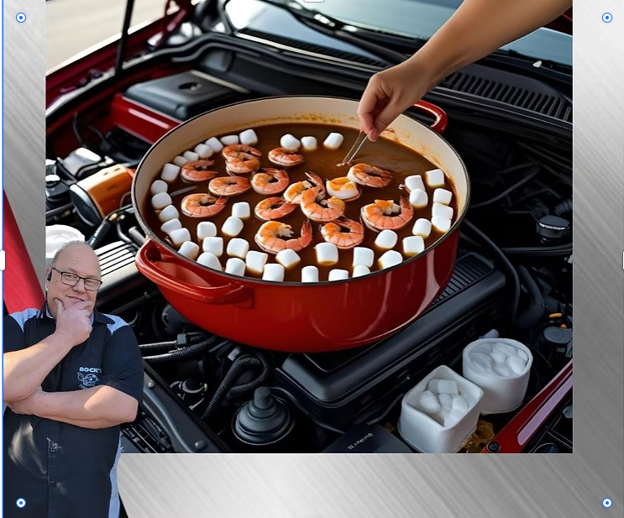
And around here, we know better than to put marshmallows in the gumbo.
Here in Louisiana, we take certain recipes seriously.
A great gumbo isn't something you make by opening the pantry, grabbing whatever catches your eye, throwing it all in a pot, and hoping for the best.
There's a method to it.
There's the roux. The seasoning. The vegetables. The stock. The meat or seafood. The timing.
Everyone's family recipe may be a little different—and we're certainly not getting in the middle of the great tomatoes-in-gumbo debate—but there are still some things that simply don't belong.
Swap the shrimp for marshmallows and tell your Maw Maw it's your “creative interpretation,” and you're probably eating dinner alone.
Your vehicle isn't all that different.
It has its own carefully engineered recipe.
Engine oil has a job. Coolant has a job. Brake fluid has a job. Transmission fluid has a job. Tires, belts, filters, batteries, sensors, and hundreds of other components all have specific purposes.
When the correct components and fluids work together, your vehicle can give you years of dependable service.
But start putting the wrong things in the wrong places, ignoring important maintenance, or trying shortcuts that were never intended to be permanent repairs, and that recipe can go sideways pretty quickly.
Sometimes the result is simply inconvenient.
Sometimes it's expensive.
And sometimes it can affect your safety.
So pull up a chair. We're stirring the pot and talking about 10 bad car-care habits we'd really like drivers to leave out of the recipe.
1. Mixing the Wrong Coolants
Coolant may look simple.
It's colorful liquid that goes into the cooling system. How complicated could it be?
Quite a bit, actually.
Modern vehicles can require different coolant formulations depending on the manufacturer, model, engine, and year. You'll see coolants in different colors—green, orange, yellow, blue, pink, purple—but color alone isn't a reliable way to determine whether two coolants are compatible.
That's an important point.
You shouldn't walk into a parts store, look under the hood, see orange coolant, and assume every orange bottle on the shelf is automatically correct.
Coolants contain different additive packages designed to protect the metals, seals, gaskets, water pumps, radiators, and other components used in a particular cooling system.
Mix incompatible formulations and you may reduce the coolant's protective properties. In some situations, incompatible products can contribute to deposits or contamination inside the cooling system.
That's where our gumbo rule comes in.
Chicken-and-sausage gumbo and seafood gumbo may both be delicious. That doesn't mean you dump half of each pot together and assume you've improved dinner.
What coolant actually does
Your coolant isn't there only to keep your engine from freezing.
In Louisiana, freezing probably isn't the first thing on most people's minds anyway.
Coolant helps:
- Carry heat away from the engine
- Raise the boiling point of the cooling system
- Protect components against corrosion
- Lubricate certain cooling-system components
- Protect against freezing during cold weather
Your engine produces an enormous amount of heat. The cooling system has to manage that heat mile after mile, including when you're sitting on Highway 190 in August wondering whether the sun has personally declared war on St. Tammany Parish.
If that system can't do its job, overheating can cause serious engine damage.
The better recipe
Use the coolant specification required by your vehicle manufacturer, not simply a coolant that appears to be the right color.
If the coolant level is low and you don't know what belongs in the vehicle, ask before adding something.
And if you're repeatedly losing coolant, simply topping it off isn't solving the problem.
Coolant shouldn't routinely disappear. A low level can indicate a leak or another cooling-system concern that needs to be investigated.
2. Putting Off Oil Changes
If coolant helps manage heat, engine oil is one of the ingredients keeping all those moving engine parts from having a very bad day.
Oil lubricates internal components, helps control heat, carries contaminants toward the filter, and protects surfaces from wear.
Over time, however, oil becomes contaminated and its additives are depleted.
That's why an oil change isn't simply someone trying to sell you a fresh bottle of oil.
It's maintenance your engine was designed to receive.
What happens when you keep stretching the interval?
One missed oil change doesn't mean your engine will immediately explode in the Walmart parking lot.
But repeatedly running oil far beyond the appropriate interval can contribute to:
- Increased engine wear
- Sludge and deposit formation
- Poor lubrication
- Restricted oil passages
- Timing-system problems on some engines
- Increased oil consumption
- Internal engine damage
In severe cases, lack of lubrication can eventually lead to catastrophic engine failure.
At that point, the money “saved” by skipping oil changes starts looking pretty insignificant next to an engine replacement.
But how often should you change your oil?
You've probably heard everything from:
“Every 3,000 miles!”
to:
“My cousin went 20,000 miles and his truck is fine.”
Neither is a universal maintenance schedule.
The appropriate interval depends on the vehicle, oil specification, driving conditions, manufacturer recommendations, mileage, and sometimes vehicle history.
Modern synthetic oils and oil-monitoring systems can allow longer intervals on many vehicles than were common years ago. On the other hand, frequent short trips, severe operating conditions, towing, extended idling, or other usage can affect maintenance needs.
At Rock's, we generally want the maintenance plan to fit your vehicle and how you actually use it.
That's more useful than giving every driver the exact same number.
Don't forget the oil level
Oil changes aren't the only thing that matters.
Some engines consume oil between services.
That means you can technically be “not due for an oil change” and still have an oil level that's dangerously low.
Checking the oil periodically—especially on a vehicle known to consume oil—is a good habit.
The better recipe
Follow an appropriate oil-change interval for your particular vehicle and check the oil level between services when needed.
And make sure the correct oil viscosity and specification are being used.
Which conveniently brings us to mistake number three.
3. Using the Wrong Oil or Other Fluids
Here's where automotive maintenance becomes a little less like making sweet tea.
You can't always substitute one ingredient because you ran out of another.
Today's vehicles use highly specific fluids.
Engine oils have different viscosities and specifications. Automatic transmissions can require very particular fluid formulations. Power-steering systems, transfer cases, differentials, brake systems, and cooling systems may each have their own requirements.
Putting in “something close enough” isn't always close enough.
Engine oil is more than 5W-30 versus 0W-20
Those familiar numbers describe viscosity characteristics, but modern manufacturers can also require oils meeting particular performance standards.
Using oil that doesn't meet the correct requirements may affect lubrication, emissions equipment, fuel economy, variable valve timing systems, turbochargers, or other components.
This doesn't mean you should panic if you've ever switched oil brands.
Brand isn't the primary issue.
Correct specification is.
And the old idea that synthetic and conventional oil can never be mixed isn't quite accurate. Many engine oils are chemically compatible. The more important question is whether the finished oil in the engine meets the manufacturer's required viscosity and specifications.
When in doubt, use what the vehicle manufacturer calls for.
Transmission fluid is especially important
People sometimes assume transmission fluid is transmission fluid.
Unfortunately, transmissions didn't get that memo.
Different transmissions use different fluid characteristics. Some require fluids designed for a specific transmission family or manufacturer.
Using the wrong fluid can affect shift quality, lubrication, hydraulic operation, seals, and component life.
That's a potentially expensive experiment.
The better recipe
Before adding any fluid yourself, know:
What fluid is low? Why is it low? And exactly what specification does the vehicle require?
If you're unsure, don't guess.
Asking a question is much cheaper than correcting the wrong answer.
4. Forgetting About Brake Fluid
Most drivers know brake pads wear out.
Far fewer think about the fluid transferring force through the hydraulic brake system every time they press the pedal.
Brake fluid is hygroscopic, meaning it can absorb moisture over time.
As moisture content increases, the fluid's boiling point can decrease and internal corrosion protection can be affected.
Under normal driving, you may never notice a dramatic difference.
But braking generates heat, particularly during repeated or heavy braking. Brake fluid needs to perform consistently under those conditions.
Does everyone need brake fluid every two years?
Not necessarily.
Brake-fluid service recommendations vary by vehicle manufacturer. Some manufacturers specify intervals. Others recommend inspection or testing rather than a universal mileage or time interval.
That's why we prefer testing and manufacturer guidance rather than automatically declaring every vehicle needs brake fluid at exactly the same age.
When we evaluate it, we're looking at the actual condition of the system and the vehicle's maintenance requirements.
That's part of an important philosophy at Rock's:
Maintenance should have a reason behind it.
You should understand why something is being recommended.
Why brake fluid matters
Your brake system is one place where shortcuts aren't worth taking.
Contaminated or deteriorated fluid can contribute to corrosion within hydraulic components and may affect braking performance under demanding conditions.
The braking system should be considered as a complete system—not simply pads.
That includes:
- Pads
- Rotors
- Calipers
- Hoses
- Hydraulic components
- Brake fluid
- ABS components
- Related hardware
The better recipe
Follow the manufacturer's brake-fluid recommendations and have the fluid inspected or tested when appropriate.
If service is recommended, ask why.
A good shop should be able to explain it.
5. Driving on Worn or Damaged Tires
We've said it before:
Bald may look good on Rock.
Not so much on your tires.
Your tires are the only parts of your vehicle designed to remain in contact with the road.
Everything the vehicle does—accelerating, turning, and stopping—ultimately depends on four relatively small patches of rubber.
That makes tire condition pretty important.
Tread isn't just about passing inspection
Tread channels water away from the tire's contact patch.
As tread wears down, the tire has less ability to manage water.
And if there's one thing Louisiana knows how to produce besides good food, it's rain.
A summer thunderstorm can turn a dry road into standing water in minutes.
Reduced tread depth increases the risk of hydroplaning and can lengthen stopping distances on wet pavement.
Don't only inspect the outside edge
Here's something we regularly encounter:
A client looks at the outside of the tire and sees plenty of tread.
Everything looks fine.
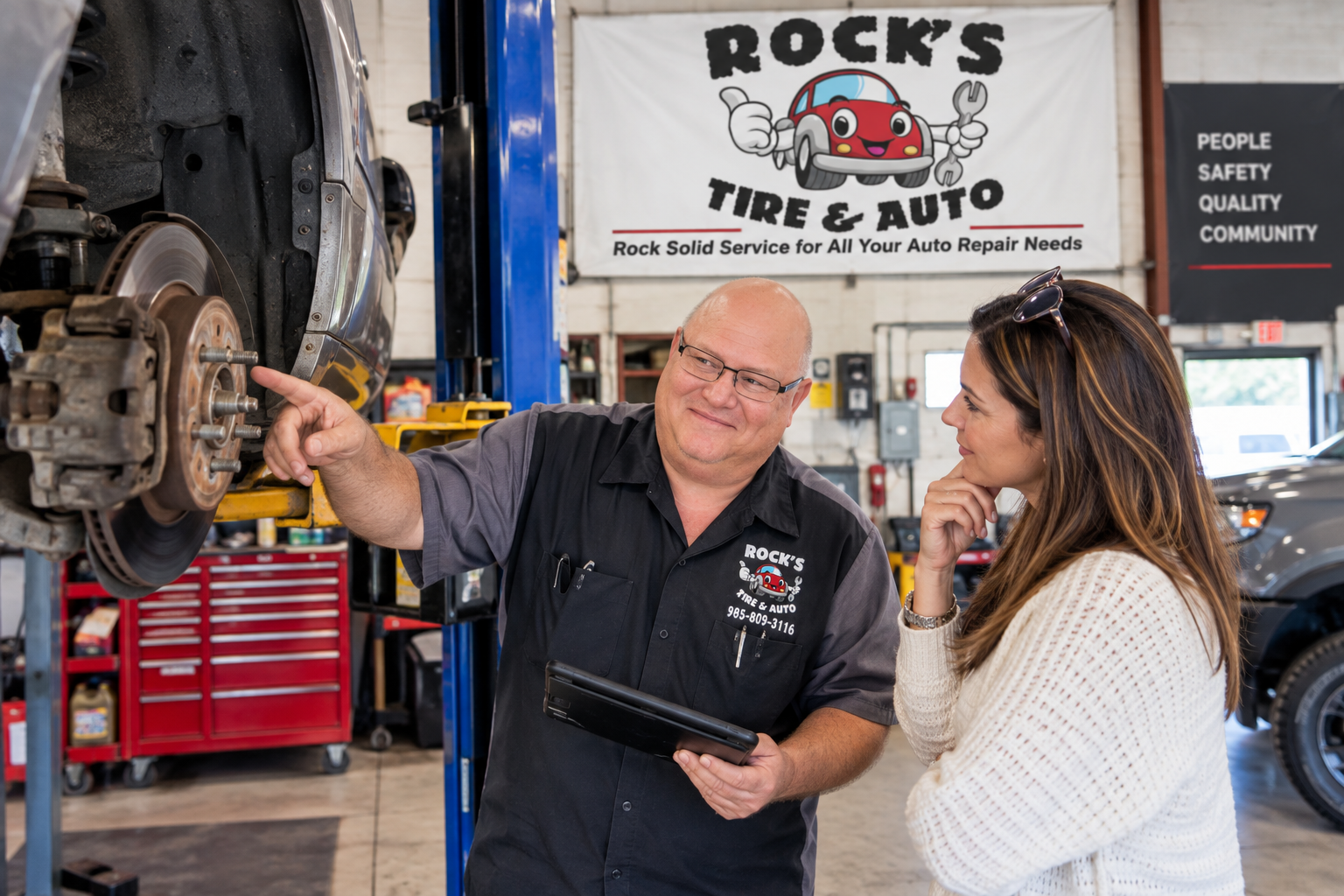
Then the vehicle goes on the lift and the inside edge is worn nearly to the cords.
Alignment issues, worn suspension components, incorrect tire pressure, or other conditions can create uneven wear that isn't obvious when you're standing beside the car.
That's one reason a proper vehicle inspection can catch problems that a quick walk-around misses.
Tire damage matters too
Tread depth isn't the only concern.
Watch for:
- Bulges or bubbles
- Sidewall cuts
- Cracking
- Exposed cords
- Uneven wear
- Repeated pressure loss
- Punctures
- Vibration
- Signs of impact damage
A bulge in a tire indicates internal structural damage and isn't something to “keep an eye on until next month.”
About that penny test...
The penny test is familiar, but a tread-depth gauge is more accurate and inexpensive.
More importantly, don't wait for a tire to become virtually slick before thinking about replacement—especially if you frequently drive in heavy rain.
The better recipe
Have your tires inspected periodically, maintain proper inflation, rotate them when appropriate, and pay attention to unusual wear.
And if tires keep wearing unevenly, don't just keep buying tires.
Find out why.
6. Ignoring Dashboard Warning Lights
Dashboard lights are your vehicle's way of trying to communicate with you.
Unfortunately, they speak mostly in hieroglyphics.
There's the little engine.
The horseshoe-looking tire.
The oil can.
The thermometer.
The ABS letters.
And every now and then, something that appears to have been designed specifically to make you search Google while sitting at a red light.
The important thing to understand is that not all warning lights mean the same thing.
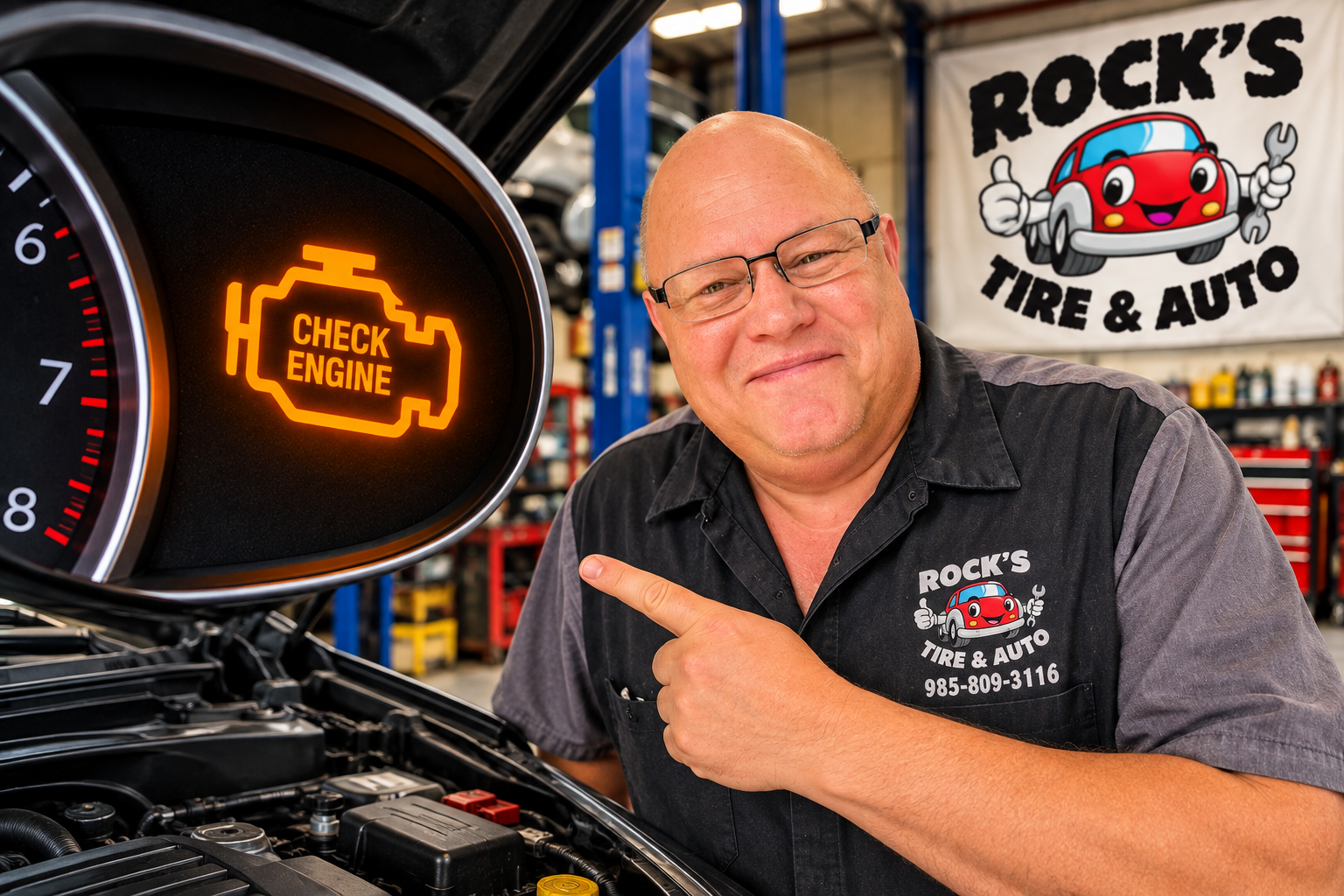
A check-engine light isn't automatically an emergency
A steady check-engine light often indicates that the vehicle's computer has detected a fault and stored diagnostic information.
That doesn't automatically mean:
“Pull over immediately.”
But it also shouldn't be ignored indefinitely.
The fault may involve emissions, engine performance, fuel control, ignition, sensors, or another monitored system.
A flashing check-engine light is different
A flashing check-engine light can indicate a condition such as a severe misfire that may damage the catalytic converter.
That deserves more urgent attention.
Some warning lights mean STOP
An oil-pressure warning or overheating warning can indicate a condition capable of causing serious engine damage very quickly.
If your vehicle is overheating or has lost oil pressure, continuing to drive because you're “only five minutes from home” can turn a repairable problem into a ruined engine.
And a code isn't a diagnosis
This is another mistake worth mentioning.
Someone plugs in a scanner and gets:
P0-something-something.
Then immediately declares:
“You need an oxygen sensor.”
Not necessarily.
A diagnostic trouble code identifies a condition the computer has detected. It gives the technician a starting point.
It does not always identify the failed component.
Our favorite way to put it is:
A scanner gives us a clue. Testing gives us the answer.
The better recipe
Pay attention to warning lights.
If you aren't sure whether it's safe to continue driving, ask.
And when diagnosis is needed, determine the actual cause instead of replacing parts based solely on a code description.
7. Overloading Your Vehicle
We understand.
Sometimes you're helping somebody move.
Sometimes you're heading to the hunting camp.
Sometimes you've gone to Costco for “three things” and somehow emerge with enough merchandise to establish a small independent nation.
But every vehicle has weight limits.
Those limits aren't suggestions placed on the door sticker because engineers had extra room.
Extra weight affects more than suspension
Overloading can increase stress on:
- Tires
- Wheel bearings
- Suspension
- Brakes
- Transmission
- Cooling system
- Drivetrain
It can also affect vehicle handling and stopping distance.
Remember: adding weight doesn't magically make your brakes larger.
They're now being asked to stop significantly more mass.
Tires have load limits too
Each tire has a load rating.
If a vehicle is heavily loaded, properly inflated tires become especially important. Excessive weight combined with underinflation increases heat and stress within the tire.
Towing adds another layer
If you're towing, payload and towing capacity aren't interchangeable.
Tongue weight, passengers, cargo, accessories, and trailer load all factor into what the vehicle is being asked to carry and pull.
The better recipe
Check the manufacturer's payload and towing information before heavy hauling.
If what you're carrying exceeds what the vehicle was designed for, use a vehicle or trailer properly equipped for the job.
Sometimes the best automotive repair is the one you never create.
8. Choosing Replacement Parts Based Only on the Lowest Price
Everybody wants to save money.
We do too.
But there's a difference between getting good value and simply buying the cheapest component available.
Automotive parts can vary significantly in construction, materials, tolerances, warranty support, and expected service life.
Not every aftermarket part is bad.
In fact, many high-quality aftermarket manufacturers make excellent components.
Likewise, “OEM” isn't automatically necessary for every repair.
The real question should be:
Is this the right-quality part for this application?
Why parts quality matters
Imagine replacing a suspension component with the cheapest option available.
If it wears prematurely, you don't just buy the part again.
You may also pay for:
- Additional labor
- Another alignment
- Additional downtime
- Related tire wear
- Another shop visit
Suddenly the “cheapest repair” isn't cheap anymore.
Fit matters too
A part that doesn't fit correctly or perform like the original design can affect related components.
Modern vehicles are systems. One component doesn't always operate in isolation.
That's why our repair philosophy is about doing the job correctly rather than simply finding the lowest number on a parts website.
Why Rock's doesn't install client-supplied parts
One reason we provide the parts used in our repairs is that we need to know what we're installing and be able to stand behind the complete repair.
If there's a problem, we don't want a client stuck between:
“The shop says it's the part.”
and
“The parts seller says it's the installation.”
We want accountability for the repair.
The better recipe
Choose quality parts appropriate for the vehicle and repair.
The goal isn't necessarily to buy the most expensive component.
It's to avoid paying twice for the same job.
9. Improperly Jump-Starting a Vehicle—or Treating a Dead Battery as the Diagnosis
We need to clear something up here.
Traditional jumper cables are not inherently bad.
Used correctly, they're a legitimate way to jump-start many vehicles.
The problem is that incorrect jump-starting can be dangerous, and modern electrical systems make mistakes potentially expensive.
Connect cables incorrectly and you can create sparks, damage electronics, or create other hazards.
Why we like portable jump boxes
A quality portable jump pack can be a great addition to an emergency kit.
You don't need another vehicle.
You don't have two cars positioned awkwardly in a parking lot.
Many modern units include safeguards that reduce the likelihood of incorrect connections.
They're convenient and useful.
But you still need to follow the manufacturer's instructions.
Here's the bigger mistake: assuming a dead battery means you need a battery
A car won't start.
Someone jumps it.
Therefore:
“Battery's bad.”
Maybe.
But not always.
A no-start or discharged battery can result from:
- An aging battery
- Charging-system problems
- A parasitic electrical draw
- Loose or corroded connections
- A starter problem
- Something being left on
- Other electrical faults
This is another perfect example of symptom versus diagnosis.
The dead battery is what you experienced.
The reason it happened still needs to be determined.
The better recipe
Keep a quality jump box available if you'd like one, learn how to use it safely, and don't assume that getting the engine running has solved the underlying issue.
If the battery repeatedly dies, have the battery and related systems tested.
10. Waiting Until Something Breaks Before Having the Vehicle Looked At
This may be the most expensive bad habit on the entire list.
Some drivers have two maintenance categories:
Running.
and
Not running.
If it's running, everything must be fine.
If it isn't running, call somebody.
Unfortunately, vehicles often give us opportunities to catch problems before they reach category two.
Preventive maintenance isn't about replacing good parts
This is important.
We don't believe preventive maintenance means walking into a shop and automatically saying yes to everything on a list.
A good maintenance strategy should help you understand:
- What's good
- What needs attention now
- What is beginning to wear
- What maintenance is due
- What can wait
- What needs to be monitored
That's why inspections are valuable.
Small clues can reveal developing problems
For example:
A slight coolant seep may eventually become a significant leak.
Uneven tire wear may point toward an alignment or suspension issue.
A torn CV boot may eventually allow contamination into the joint.
A weak battery may pass today but be nearing the end of its usable life.
Brake pads may still be safe but getting close enough that you can plan for replacement.
Catching those things gives you options.
And options are valuable.
Surprise repairs are the most stressful repairs
Imagine two scenarios.
Scenario A: We tell you at today's oil change that your tires have several months remaining, but they're getting low and you should plan on replacing them before the rainy season.
Scenario B: Six months later, you're standing beside a vehicle with a failed tire, trying to rearrange your workday and figure out how you're getting the kids where they need to go.
Same tires.
Very different experience.
Preventive maintenance isn't simply about saving money.
It's also about reducing surprises.
The better recipe
Have your vehicle inspected regularly and build a maintenance plan.
You don't necessarily have to do everything today.
The goal is to know what's happening so you get to make the decision before the vehicle makes it for you.
Bonus Bad Habit: Using Temporary Products as Permanent Repairs
We couldn't talk about bad car-care “ingredients” without mentioning this one.
Some products are designed for emergency situations.
The trouble starts when temporary becomes permanent.
Fix-a-Flat and tire sealants
Emergency tire sealants may occasionally help someone get out of a difficult situation, depending on the product, tire, puncture, and vehicle manufacturer's guidance.
But they aren't the same thing as a proper tire repair.
A tire needs to be removed and inspected to determine whether the damage is actually repairable.
Not every puncture can be repaired.
Location matters.
Size matters.
Internal damage matters.
Driving on the tire while low or flat matters.
At Rock's, tire repairs should follow proper repair standards rather than simply plugging anything with a hole in it.
Sealant can also make the tire messy to service and may complicate inspection.
DIY A/C refrigerant cans
Another popular shortcut is the do-it-yourself A/C recharge can.
The A/C isn't cold, so add refrigerant.
Problem solved?
Maybe temporarily.
But refrigerant doesn't get “used up” like gasoline.
If the system is low, there's often a reason.
Simply adding refrigerant without knowing system pressures, charge level, and why refrigerant is missing can mask the actual issue. Some DIY products may also contain sealers or additives technicians would rather not have circulating through A/C service equipment.
Proper A/C service begins with figuring out why it isn't cooling properly.
Stop-leak products
Whether it's for cooling systems, oil leaks, power steering, or other applications, bottled stop-leak products deserve caution.
Some may have limited emergency uses, but they aren't equivalent to repairing a failed component or seal.
And certain products can create additional problems or make later repairs more difficult.
And duct tape?
We love duct tape.
It's practically a Louisiana household tool.
Broken lawn chair?
Duct tape.
Storage tote cracked?
Duct tape.
Need to hold something together until tomorrow?
There's a fair chance duct tape is entering the conversation.
But if your automotive repair procedure ends with:
“That oughta hold.”
we probably need another plan.
Why Bad Car-Care Habits Can Cost More Than Money
When we talk about vehicle maintenance, it's easy to focus entirely on dollars.
And yes, poor maintenance can be expensive.
But there are three bigger reasons we want clients to understand what's happening with their vehicles.
1. Safety
Tires, brakes, steering, suspension, lighting, and other vehicle systems directly affect your ability to control and stop the vehicle.
Some repairs are comfort issues.
Others are reliability issues.
Some are safety issues.
Those categories shouldn't all be treated the same.
2. Reliability
A vehicle that doesn't start isn't merely an automotive inconvenience.
It can mean:
Missing work.
Missing school.
Missing an appointment.
Calling someone for a ride.
Waiting for a tow truck.
Rearranging an entire family's schedule.
Most people aren't trying to build a show car.
They simply want the vehicle to start in the morning and get them where they're going.
That's a perfectly reasonable goal.
3. Decision-making
This may be the most overlooked benefit of good vehicle maintenance.
Information gives you choices.
If we tell you today that something will probably need attention within the next several months, you can plan.
You can budget.
You can schedule it when it's convenient.
You can decide whether you're keeping the car.
You can ask questions.
When something fails without warning, many of those choices disappear.
Now you need it fixed because the vehicle isn't moving.
That's why our goal at Rock's isn't to scare you into doing everything today.
It's to help you understand your vehicle well enough to make good decisions about it.
You Don't Need to Be a Mechanic to Take Good Care of Your Car
Sometimes people apologize to us because they don't know much about cars.
There's no reason to.
You're not supposed to know everything we know.
That's why we have technicians.
Just like Rock isn't doing his own dental work because he watched three YouTube videos about molars.
What you should be able to expect from your repair shop is an explanation you understand.
You should be able to ask:
What did you find?
How did you determine that?
Is this a safety problem?
Does it need to be handled now?
Can it wait?
What happens if I wait?
Is this maintenance or a repair?
What are my options?
Those aren't annoying questions.
They're good questions.
At Rock's Tire & Auto, we'd much rather help you understand the recommendation than expect you to blindly approve something because “the mechanic said so.”
Your vehicle.
Your money.
Your decision.
Our job is to give you good information.
Digital Vehicle Inspections Help You See What We See
One of the challenges with auto repair is that much of your vehicle is difficult to see.
You can't exactly crawl underneath it in the parking lot every morning and inspect the suspension.
That's why digital vehicle inspections can be so helpful.
When appropriate, photos and videos allow you to actually see what the technician is talking about.
If your inside tire edge is worn badly, we can show you.
If something is leaking, we can show you.
If a component is damaged, you don't simply have to imagine what we're describing over the phone.
That doesn't mean every finding automatically requires immediate repair.
The inspection gives us information.
Then we can help prioritize it.
Think of it as looking at the recipe before deciding what ingredients you need to buy.
Maintenance Should Fit Your Plans for the Vehicle
Here's a question we wish more shops asked:
How long are you planning to keep this car?
Because that matters.
Someone planning to trade a vehicle next month may make different maintenance decisions than someone hoping to drive the same vehicle for another eight years.
A parent preparing a vehicle for a teenager may prioritize things differently than someone with a second car they only drive occasionally.
A contractor putting 30,000 miles a year on a work truck has different needs from someone driving 5,000 miles a year around town.
Good vehicle care isn't simply following a generic checklist.
It's understanding:
The vehicle.
Its condition.
How it's used.
What the owner needs from it.
Then building a plan around those things.
That's when auto repair becomes less reactive and more manageable.
The Rock's Recipe: See It. Understand It. Prioritize It. Fix It Right.
If we had to summarize our approach to car care, it would look something like this:
See what's actually happening.
Inspect and test instead of guessing.
Understand the cause.
Don't replace parts simply because a code or symptom points in their general direction.
Explain it clearly.
You shouldn't need an automotive engineering degree to understand what's happening with your own car.
Prioritize the recommendations.
Safety and urgent reliability concerns should be distinguished from maintenance and future planning.
Fix it correctly.
Use appropriate procedures and quality components so you're not paying for the same repair again unnecessarily.
It's not as catchy as your grandmother's gumbo recipe.
But it works pretty well for cars.
A Final Word From the Garage
Louisiana has taught us a few important things.
Humidity is undefeated.
You can never predict when somebody will call a gathering a party and suddenly 47 people are there.
And the right ingredients matter.
That's true whether we're talking about a pot of gumbo or the vehicle carrying your family down the highway.
Your car was engineered to operate with specific fluids, parts, capacities, and maintenance requirements.
You don't need to obsess over every component.
You don't need to become a mechanic.
And you certainly don't need to replace everything all at once.
You simply need good information, appropriate maintenance, and someone you trust enough to ask when you're unsure.
That's what we want Rock's Tire & Auto to be for our clients.
Not the place that throws a pile of recommendations at you and waits for a credit card.
The place that says:
“Here's what we found.”
“Here's why it matters.”
“Here's what we'd do first.”
“Here's what can wait.”
Then you decide what makes sense for your vehicle, your family, and your budget.
Because car trouble is stressful enough.
Taking care of your vehicle shouldn't have to be.
And remember:
No marshmallows in the gumbo.
Frequently Asked Questions About Car Maintenance
Can I mix different colors of coolant?
Don't determine coolant compatibility by color alone. Different manufacturers can use similar colors for different formulations. Use coolant that meets the specification required by your vehicle manufacturer. If you don't know what's currently in the cooling system, it's better to verify before adding another product.
What happens if you mix the wrong coolant?
Mixing incompatible coolants can reduce corrosion protection or create deposits and contamination in the cooling system. Depending on the products and vehicle, this can contribute to cooling-system problems. If you believe incompatible coolants have been mixed, have the system evaluated rather than continuing to add more.
How often should I change my engine oil?
There's no single interval that's correct for every vehicle. Follow the manufacturer's recommendations while also considering the type of oil, vehicle age, operating conditions, mileage, and how the vehicle is used. If you're unsure, a trusted repair shop can help you develop an appropriate maintenance schedule.
Can I switch between synthetic and conventional motor oil?
Many modern oils are chemically compatible, but the important consideration is whether the oil meets your engine manufacturer's required viscosity and performance specifications. Some vehicles specifically require synthetic or oils meeting particular standards. Follow the requirements for your engine rather than choosing solely by oil type or price.
Is it bad to drive when the oil level is low?
Yes. Running an engine with insufficient oil can reduce lubrication and cause serious internal engine damage. Some engines consume oil between changes, so checking the oil level periodically can be important even if an oil change isn't due yet.
How do I know which fluids my car requires?
Your owner's manual is a good starting point. It normally specifies requirements for engine oil, coolant, brake fluid, transmission fluid, and other service fluids. Your repair shop can also look up the manufacturer's specifications for your exact vehicle.
Does brake fluid really need to be changed?
Brake fluid absorbs moisture over time, which can affect its boiling point and corrosion protection. Service intervals vary among manufacturers, so follow your vehicle's maintenance recommendations and have the fluid inspected or tested when appropriate.
How do I know if my tires are too worn?
Tread depth is one factor, but tire condition also matters. Look for uneven wear, cracking, bulges, exposed cords, repeated air loss, and other damage. A tread-depth gauge provides a more precise measurement than visually estimating tread.
Why are my tires worn on the inside but not the outside?
Inside-edge wear can be related to wheel alignment, suspension geometry, worn components, or other conditions. Because the inner edge isn't always easy to see, this problem may go unnoticed until a vehicle is inspected on a lift. Replacing the tires without correcting the cause may result in the new tires wearing the same way.
Is it safe to drive with a bubble on my tire?
A visible bulge or bubble generally indicates internal tire damage and should be taken seriously. The tire's structural integrity may be compromised. Have it inspected promptly rather than continuing normal driving and hoping the bubble doesn't get worse.
Is a steady check-engine light safe to drive with?
Sometimes, but it depends on the cause. A steady check-engine light often means the computer has detected a fault that should be diagnosed, although it isn't necessarily an immediate emergency. If the vehicle is running poorly, overheating, losing power, or showing other warning signs, seek advice before continuing to drive.
What does a flashing check-engine light mean?
A flashing check-engine light can indicate a severe condition such as an active misfire capable of damaging the catalytic converter. Reduce driving and have the vehicle evaluated promptly.
Does a diagnostic trouble code tell you which part is bad?
Not necessarily. A trouble code identifies a condition the computer detected and helps guide diagnosis. A technician may still need to review data, inspect related systems, test circuits or components, and verify the actual root cause before recommending a repair.
A code is a clue—not a verdict.
Can I use Fix-a-Flat instead of repairing my tire?
Emergency tire sealant is not the same as a proper tire repair. Whether a puncture can be repaired depends on its size, location, tire condition, and whether the tire was driven while low or flat. A tire should be properly inspected to determine whether it can safely be repaired.
Can every nail hole in a tire be repaired?
No. Punctures in certain areas, including many shoulder or sidewall locations, generally aren't considered safely repairable. Damage size and the tire's overall condition also matter. Proper tire repair standards should be followed rather than simply plugging every puncture.
Are jumper cables bad for modern cars?
Jumper cables aren't inherently bad when used correctly and when the vehicle manufacturer permits the procedure. Incorrect connections can create electrical or safety hazards. Portable jump packs are convenient because they don't require another vehicle and many include built-in protection features. Always follow the vehicle and jump device instructions.
If my car needed a jump, does that mean I need a new battery?
Not automatically. A discharged battery may be caused by an old battery, a charging-system problem, an electrical draw, poor connections, or something simply being left on. Testing helps determine why the battery became discharged before replacing parts unnecessarily.
Is it okay to use a DIY A/C recharge can?
Adding refrigerant without determining why the system is low can mask an underlying leak or create an incorrect refrigerant charge. Some DIY products also contain additives or sealers. Proper A/C service involves evaluating system operation and determining the reason for poor cooling rather than simply adding refrigerant.
Are aftermarket auto parts bad?
No. There are excellent aftermarket parts and poor-quality aftermarket parts. There are also repairs for which OEM components may be preferable. The goal should be choosing a quality component appropriate for the vehicle and application—not automatically assuming “aftermarket” means bad or “most expensive” means best.
Why won't Rock's Tire & Auto install parts I bring myself?
Providing the parts allows us to verify what is being installed and stand behind the complete repair. It avoids situations where a client is caught between a parts supplier and repair shop if a component fails or doesn't fit correctly. Our goal is accountability for the work we perform.
How often should I have my car inspected?
There's no universal inspection schedule that applies to every driver. Regular inspections during maintenance visits can be helpful, particularly before long trips, as mileage increases, or when a vehicle is being kept long-term. The goal is to identify developing problems before they become emergencies.
Is preventive maintenance really cheaper than waiting for something to break?
Not every problem can be prevented, and maintenance doesn't guarantee a vehicle will never break down. However, catching wear, leaks, fluid deterioration, tire problems, and other developing concerns early can often reduce secondary damage and gives you time to plan repairs instead of dealing with them during a breakdown.
How do I know what repairs need to be done now and what can wait?
Ask your repair shop to prioritize recommendations. At Rock's, we believe clients should understand the difference between an immediate safety concern, a reliability issue, routine maintenance, and something that can simply be monitored. That way, you can make a plan rather than feeling like everything has to be done at once.
Where can I get my vehicle checked in Covington, Louisiana?
If you're in Covington, Abita Springs, Mandeville, Folsom, or the surrounding St. Tammany Parish area, Rock's Tire & Auto can help you understand what's happening with your vehicle and develop a repair or maintenance plan.
Need help figuring out your car's recipe?
📍
Rock's Tire & Auto — Covington, LA
📞
985-809-3116
💻
RocksTireAuto.net
We'll inspect it, explain what we find, help you prioritize the next steps, and leave the marshmallows where they belong.
Anywhere but the gumbo.