The 10 Scariest Car Repairs (And How to Avoid a Financial Nightmare)
A Rock's Tire & Auto Guide to Understanding Major Car Repairs, Preventing Costly Breakdowns, and Keeping Your Vehicle Safe
Quick Summary: Don't Let Car Repairs Scare You!
Few things make a driver's stomach drop faster than an unexpected noise under the hood, a flashing dashboard warning light, or a mechanic mentioning the words engine replacement.
The uncertainty can be just as frightening as the potential repair bill. Is the vehicle safe to drive? How much will the repair cost? Is it worth fixing? Could the problem have been prevented?
At Rock's Tire & Auto in Covington, Louisiana, we understand those concerns. We've spent years helping local drivers navigate unexpected repairs, and one thing we've learned is that the scariest part of car repair is often not knowing what comes next.
The good news? Many major automotive problems develop warning signs before they become catastrophic. Recognizing those signs, staying current with maintenance, and working with a trusted repair shop can help prevent expensive surprises.
In this guide, we're breaking down 10 automotive repairs that commonly cause drivers the most concern:
- Transmission repair or replacement
- Engine rebuild or replacement
- Timing belt or timing chain failure
- Complex electrical system problems
- Brake system failure
- Steering and suspension repairs
- Head gasket failure
- Air conditioning system replacement
- Hybrid and electric vehicle battery or high-voltage repairs
- Fuel system and fuel pump failures
We'll explain why each repair can be intimidating, the warning signs to watch for, how to reduce your risk, and what to do if your vehicle starts acting up.
Our goal isn't to scare you into scheduling repairs. It's to give you the knowledge and confidence to make informed decisions about your vehicle.
Because at Rock's Tire & Auto, we believe you deserve exceptional care, expert repair, and a clear explanation every step of the way.
Why Are Major Car Repairs So Stressful?
Your vehicle is more than a machine.
It's how you get to work, pick up your children, visit family, run your business, and enjoy your independence.
When something goes wrong, the inconvenience can affect your entire day—or even your entire week.
For many families, an unexpected automotive repair also creates financial uncertainty.
You might find yourself asking:
- Can I afford this repair right now?
- How long will I be without my vehicle?
- Is this really what my vehicle needs?
- What happens if I wait?
- Should I repair my current vehicle or buy another one?
Those are reasonable questions, and you deserve understandable answers.
One of the biggest mistakes drivers make is assuming that every unusual sound, warning light, or mechanical problem automatically means an expensive repair.
Sometimes a frightening symptom has a relatively simple solution.
A vehicle that won't start might need a battery rather than a starter. An engine that runs poorly might have an ignition problem rather than internal engine damage. An A/C system blowing warm air might have an electrical fault rather than a failed compressor.
The key is finding the actual cause.
A symptom tells us something is wrong. Proper diagnostic testing helps us determine why.
Now, let's look at 10 repairs that can be particularly intimidating.
1. Transmission Repair or Replacement: When Your Vehicle Won't Cooperate
Few automotive problems create as much anxiety as transmission trouble.
Your transmission transfers engine power to the wheels while allowing your vehicle to operate efficiently at different speeds.
Whether your vehicle has an automatic, manual, continuously variable transmission (CVT), or another design, the transmission contains components that must work together precisely.
When those components begin failing, the repair can become complicated and expensive.
Why Transmission Repairs Are Scary
Transmission problems can affect your ability to accelerate, shift gears, or maintain vehicle speed.
In some cases, a vehicle may become undrivable without much warning.
Major transmission repairs can also involve specialized equipment, extensive labor, and costly components.
Depending on the vehicle and the failure, the solution could range from a relatively minor repair to replacing or rebuilding the transmission.
That uncertainty can make drivers understandably nervous.
Warning Signs of Transmission Trouble
Pay attention if your vehicle begins experiencing:
- Delayed engagement when shifting into Drive or Reverse
- Slipping or unexpected changes in engine speed
- Harsh, rough, or unusual shifting
- Shuddering or vibration during acceleration
- Transmission fluid leaks
- Unusual whining or grinding noises
- A transmission warning light
- A burning smell
These symptoms do not automatically mean the transmission needs replacement.
Electrical problems, fluid concerns, sensors, and other components can sometimes produce similar symptoms.
That's why testing matters.
How to Reduce Your Risk
Follow the manufacturer's transmission maintenance recommendations, including the correct fluid and service intervals.
Be cautious about ignoring small changes in shifting behavior.
If your vehicle begins slipping or hesitating, schedule an inspection before the condition becomes more severe.
Avoid towing loads beyond the vehicle's rated capacity, and follow manufacturer guidance when towing in demanding conditions.
Rock's Advice
Don't approve a transmission replacement based on symptoms alone.
Ask what testing supports the diagnosis and whether less extensive repairs have been ruled out.
A trustworthy repair shop should be able to explain what was found and why the recommended repair makes sense.
2. Engine Rebuild or Replacement: The Big One
If the transmission is one of the most feared repairs, engine replacement may be the most emotionally overwhelming.
Your engine is responsible for converting fuel into the mechanical energy that moves your vehicle.
It's a complicated assembly containing pistons, valves, bearings, timing components, seals, and numerous supporting systems.
When a major internal component fails, repairing the damage can require substantial labor.
Why Engine Repairs Are Scary
Engine problems can involve serious mechanical damage, particularly when a vehicle has been operated without adequate lubrication or proper cooling.
A major failure may require an engine rebuild or replacement.
The total expense can vary enormously depending on the vehicle, engine availability, labor, and the extent of the damage.
For an older vehicle, that leads to a difficult question:
Is it worth repairing, or should I replace the vehicle?
There's no universal answer.
A well-maintained vehicle with a major engine problem may still be worth repairing, especially if its other systems are in good condition.
On the other hand, a vehicle with extensive rust, multiple mechanical problems, and significant upcoming expenses may deserve a different financial discussion.
Warning Signs of Serious Engine Problems
Possible warning signs include:
- Knocking or unusual internal engine noises
- Repeated overheating
- Low oil pressure warnings
- Excessive exhaust smoke
- Severe oil consumption
- Persistent misfires
- Coolant and oil contamination
- Significant loss of power
- Metal particles found during inspection
Not every symptom indicates a failed engine.
For example, a misfire can result from a spark plug, ignition coil, fuel delivery issue, or mechanical problem.
The repair recommendation should follow the evidence.
How to Help Prevent Major Engine Damage
One of the simplest ways to protect your engine is to follow the correct oil change schedule.
Engine oil lubricates moving components, helps manage heat, and protects against wear.
But oil changes aren't the only important maintenance item.
Cooling system care matters too.
A coolant leak, failing water pump, or malfunctioning thermostat can cause overheating and potentially serious engine damage.
If your temperature warning light comes on or the gauge indicates overheating, safely stop driving and shut off the engine.
Do not open a hot cooling system.
Rock's Advice
When faced with an expensive engine repair, request a clear explanation of the failure and available options.
Consider the vehicle's age, mileage, overall condition, repair history, and replacement cost.
Sometimes the smartest financial decision is repairing the vehicle you already own.
Sometimes it isn't.
Our responsibility is to help you understand the options—not pressure you into one.
3. Timing Belt or Timing Chain Failure: The Problem You May Never Hear Coming
Some of the most expensive engine failures begin with a component most drivers never see.
Timing belts and timing chains synchronize critical engine components.
Their job is to keep the crankshaft and camshaft operating in the correct relationship so the valves open and close at the appropriate times.
When engine timing is disrupted, the consequences can be serious.
Why Timing Failures Are Scary
In many interference engines, a broken timing belt or a timing chain that jumps significantly out of time can allow internal components to collide.
That may result in bent valves, damaged pistons, or other internal engine damage.
In some cases, the engine simply stops running.
And unlike a worn tire or squealing brake, a timing belt may provide little obvious warning before failure.
Timing Belt Versus Timing Chain
Not all vehicles use the same design.
A timing belt is typically made from reinforced rubber and may have a manufacturer-specified replacement interval.
A timing chain is made from metal and is generally designed for a longer service life, but it can still experience wear or problems involving tensioners and guides.
It's important to know which system your vehicle uses.
For vehicles equipped with timing belts, replacement intervals vary by manufacturer and engine. Many fall around 60,000 to 100,000 miles or more, with time-based limits sometimes applying as well.
Always follow the specific manufacturer's schedule.
Warning Signs
Potential timing system concerns include:
- Rattling noises during startup
- Unusual engine noises
- Engine misfires
- Rough running
- Check engine light
- Difficulty starting
- Engine stalling
- Sudden no-start condition
Some timing belt failures occur without these symptoms.
How to Reduce Your Risk
Know your vehicle's maintenance schedule.
If you purchased a used vehicle and don't know whether the timing belt has been replaced, ask a qualified technician to review the service history and maintenance requirements.
When appropriate, related components such as tensioners, idler pulleys, seals, and water pumps may be addressed during timing belt service.
Rock's Advice
Preventive timing belt replacement is often much less expensive than repairing the engine damage caused by a broken belt.
This is one maintenance item you don't want to forget.
4. Electrical System Problems: When Your Vehicle Seems Haunted
Have you ever experienced a vehicle doing something that makes absolutely no sense?
The dashboard lights flicker.
The radio turns off unexpectedly.
The windows stop working.
The vehicle won't start one morning, then starts perfectly the next.
Welcome to the sometimes mysterious world of automotive electrical problems.
Modern vehicles rely on complicated electrical networks to control nearly everything.
From engine management to safety systems, electrical components communicate constantly.
Why Electrical Repairs Are Scary
Electrical problems can be intermittent.
That means the issue may appear only under certain temperatures, driving conditions, vibrations, or electrical loads.
Sometimes a vehicle works perfectly while sitting in the repair bay.
Other times, the problem occurs only after driving for thirty minutes.
Finding the root cause can require advanced diagnostic equipment and careful testing.
The difficult part is often not replacing a component.
It's determining which component, connection, circuit, or control system is actually responsible.
Common Electrical Warning Signs
- Intermittent starting problems
- Flickering headlights
- Random warning lights
- Battery repeatedly going dead
- Power accessories operating inconsistently
- Unusual communication-related trouble codes
- Unexpected vehicle shutdowns
- Burning electrical smells
A burning smell, visible smoke, or evidence of overheating electrical components deserves immediate attention.
How to Reduce Your Risk
Have battery and charging system concerns evaluated promptly.
Keep battery terminals in good condition.
Avoid poorly installed aftermarket accessories that can damage wiring or overload circuits.
If you experience an intermittent issue, write down when it happens.
Was it raining?
Was the A/C running?
Did the vehicle just hit a bump?
Was the engine hot or cold?
Those details can help technicians reproduce the concern.
Rock's Advice
A code reader may tell a technician which system has detected a problem.
It doesn't necessarily identify the failed component.
A trouble code is a starting point, not a shopping list.
At Rock's Tire & Auto, we believe electrical problems deserve methodical testing—not guessing and replacing parts until something works.
5. Brake System Failure: The Repair You Should Never Gamble With
Some repairs are scary because of their cost.
Brake system problems are scary because of their potential consequences.
Your braking system is one of the most important safety systems on your vehicle.
It includes more than brake pads.
Rotors, calipers, hoses, brake lines, hydraulic components, sensors, and electronic control systems all play important roles.
Why Brake Problems Are Scary
A braking problem can reduce stopping performance, increase stopping distance, or make the vehicle difficult to control.
Brake problems can develop gradually or appear suddenly.
A small fluid leak can become a serious concern.
A seized caliper may cause overheating.
Severely worn friction components can damage other parts.
Ignoring warning signs may increase both repair costs and safety risks.
Warning Signs of Brake Trouble
Watch for:
- Grinding or squealing noises
- A soft or sinking brake pedal
- Longer stopping distances
- Vehicle pulling while braking
- Vibration during braking
- Brake fluid leaks
- Brake warning lights
- Burning smells near a wheel
If your brake pedal suddenly feels abnormal, braking performance decreases significantly, or you suspect a hydraulic failure, safely stop and arrange professional assistance rather than continuing to drive.
How to Reduce Your Risk
Have your brakes inspected regularly.
Pay attention to changes in pedal feel or braking behavior.
Follow appropriate brake fluid maintenance recommendations.
Don't wait until brake pads are completely worn out before scheduling service.
At Rock's, we believe brake repairs should address the entire concern—not simply silence a noise temporarily.
That means evaluating the condition of the relevant components and recommending a complete, appropriate repair.
Rock's Advice
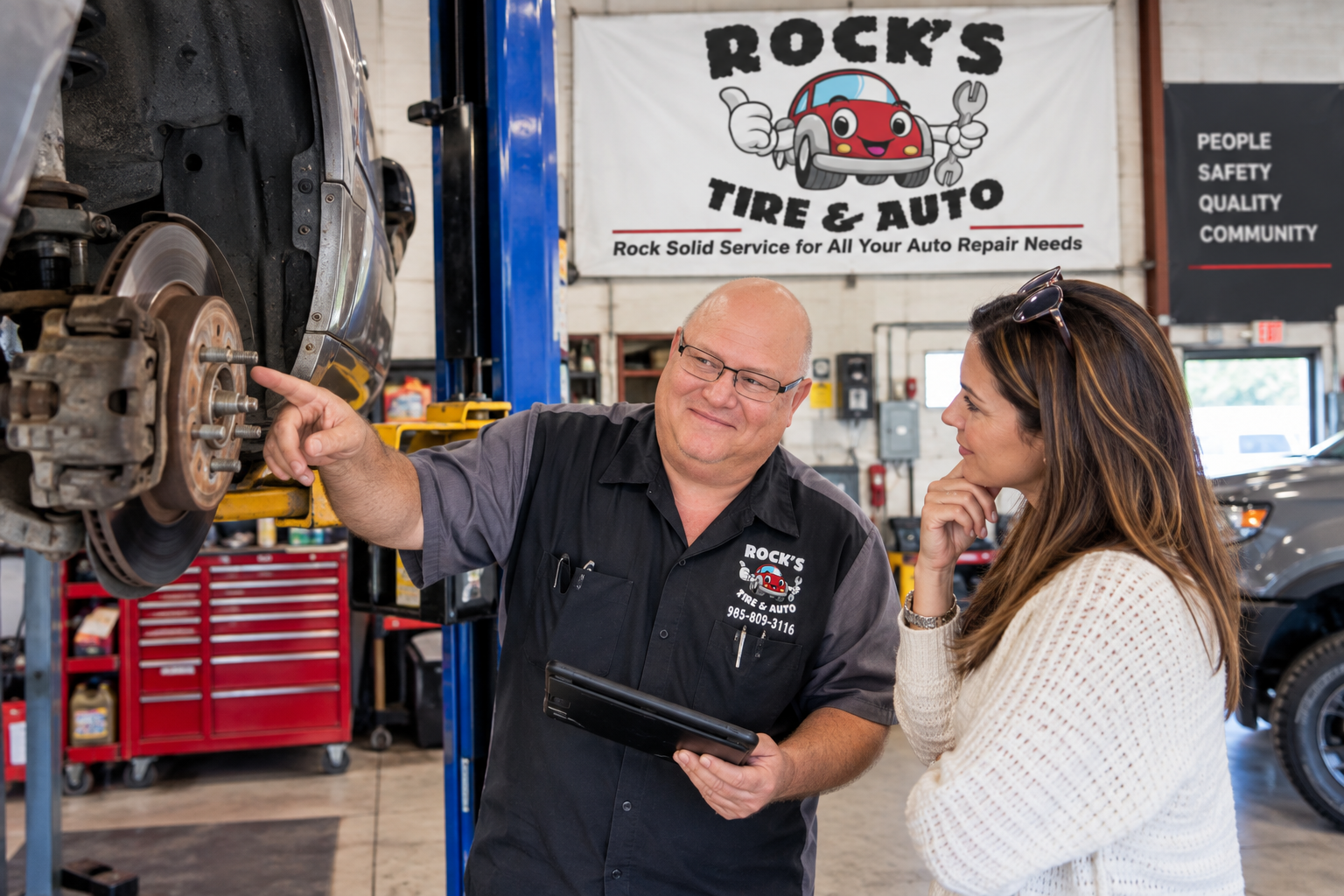
When a shop recommends brake work, ask to see the inspection findings.
Photos, measurements, and explanations can help you understand what needs attention.
Brake repairs should be based on safety and condition, not fear-based selling.
6. Steering and Suspension Problems: When Your Vehicle Has a Mind of Its Own
Your steering and suspension systems work together to keep your vehicle stable, predictable, and comfortable.
They also help maintain proper tire contact with the road.
Components such as ball joints, control arms, tie rods, shocks, struts, bushings, and steering mechanisms all contribute to vehicle handling.
When these components wear or fail, the effects can range from annoying noises to serious safety concerns.
Why Steering and Suspension Repairs Are Scary
A vehicle that wanders, pulls, shakes, or feels unstable can be frightening to drive.
Certain steering or suspension failures can also compromise control of the vehicle.
The repair may involve several related components, and worn parts can contribute to uneven tire wear.
That means ignoring a suspension issue may eventually create additional expenses.
Warning Signs
- Clunking over bumps
- Loose or wandering steering
- Excessive bouncing
- Uneven tire wear
- Steering wheel vibration
- Vehicle pulling to one side
- Unusual noises while turning
- Steering that feels unusually stiff
- Changes in vehicle ride height
Not every vibration or pulling concern comes from the suspension.
Tire problems, alignment conditions, brakes, and other systems can produce similar symptoms.
How to Reduce Your Risk
Schedule an inspection when you notice changes in steering or handling.
Have tire wear patterns evaluated.
Address damaged or worn components before they affect other systems.
After certain steering or suspension repairs, a wheel alignment may be required.
Rock's Advice
Don't ignore a clunk just because the vehicle still drives.
A noise may be the first indication that something is wearing out.
Catching a problem early gives you more opportunities to plan rather than react.
7. Head Gasket Failure: When Your Engine Starts Mixing Things That Shouldn't Mix
A head gasket seals the connection between an engine's cylinder head and engine block.
Its job is to help keep combustion pressure, engine oil, and coolant in their proper places.
When the gasket fails, those systems may no longer remain properly separated.
The result can range from an external leak to severe overheating or internal engine damage.
Why Head Gasket Repairs Are Scary
Head gasket replacement often requires substantial engine disassembly.
In some cases, the cylinder head must be inspected for warping or cracking.
If the engine has overheated severely, additional damage may be present.
That makes the final repair decision more complicated than simply installing a new gasket.
Warning Signs of Head Gasket Problems
Possible symptoms include:
- Repeated overheating
- Unexplained coolant loss
- Persistent white exhaust vapor after warmup
- Bubbles or excessive pressure in the cooling system
- Engine misfires
- Coolant contamination of engine oil
- Poor engine performance
- Combustion gases entering the cooling system
These symptoms can also have other causes.
For example, condensation may produce harmless white vapor from the exhaust on a cool morning.
A proper diagnosis helps distinguish normal operation from a serious problem.
How to Reduce Your Risk
The best protection is maintaining a healthy cooling system.
Address coolant leaks promptly.
Follow the correct coolant service recommendations.
Never continue driving an overheating vehicle in the hope that the temperature will eventually come down.
If your vehicle overheats, safely pull over and shut it off.
Do not remove the radiator cap while the system is hot.
Rock's Advice
A head gasket diagnosis should be supported by appropriate testing.
Depending on the symptoms, testing may include cooling system pressure testing, combustion gas testing, compression testing, or cylinder leak-down testing.
Before approving major engine work, make sure the diagnosis explains the symptoms.
8. Major Air Conditioning Repairs: A Louisiana Driver's Worst Summer Nightmare
Here in South Louisiana, air conditioning isn't just about comfort.
When summer temperatures and humidity climb, a working A/C system makes everyday driving much more manageable.
That's why hearing that your vehicle needs a major A/C repair can be especially frustrating.
Modern automotive A/C systems contain several important components, including the compressor, condenser, evaporator, expansion device, refrigerant lines, sensors, and electrical controls.
A failure in one area can affect the entire system.
Why A/C Repairs Can Be Expensive
Some components are relatively accessible.
Others require substantial disassembly.
An evaporator replacement, for example, may involve removing much of the dashboard on certain vehicles.
A failed compressor may also create contamination that requires additional system cleaning or component replacement.
But here's something important:
Warm air from your vents does not automatically mean your compressor has failed.
The problem could involve electrical controls, cooling fans, refrigerant loss, airflow restrictions, or another issue.
Warning Signs of A/C Trouble
- Air that isn't as cold as it used to be
- Cooling that decreases while idling
- Unusual noises when the A/C operates
- Musty or unpleasant vent odors
- Weak airflow
- A/C that works intermittently
- Visible refrigerant oil residue near leaking components
How to Reduce Your Risk
Have unusual A/C performance checked before the hottest months whenever possible.
Keep the cabin air filter maintained according to the manufacturer's recommendations.
Don't ignore unusual compressor noises.
Be cautious with do-it-yourself refrigerant recharge cans.
Adding refrigerant without knowing the actual charge amount or diagnosing the problem can cause improper system operation.
Some products also contain sealants that may complicate future repairs.
Rock's Advice
An accurate A/C diagnosis requires more than checking whether the air feels cold.
Technicians may need to evaluate system pressures, temperatures, airflow, electrical operation, refrigerant charge, and component performance.
We want to fix the reason your A/C isn't cooling—not simply make it cold for a few days.
And around Covington in August, that's a pretty important distinction!
9. Hybrid and Electric Vehicle Battery Repairs: High-Tech and High-Stakes
Hybrid and electric vehicles have changed the automotive landscape.
These vehicles use high-voltage electrical systems and sophisticated battery management technology.
Although their designs vary, they often include battery packs, power electronics, cooling systems, and specialized control modules.
For many drivers, the thought of replacing a high-voltage battery is intimidating.
Why These Repairs Are Scary
High-voltage battery systems can be expensive and require specialized knowledge.
Repair options depend heavily on the vehicle's design, age, condition, and available replacement components.
More importantly, high-voltage systems present serious electrical hazards.
These are not systems for untrained do-it-yourself experimentation.
Only properly trained personnel using appropriate procedures and protective equipment should perform high-voltage service.
Warning Signs
Potential concerns include:
- Hybrid or EV system warning messages
- Reduced available power
- Unusual battery-related temperature warnings
- Unexpected changes in battery performance
- Charging problems
- Vehicle refusing to enter its normal ready-to-drive mode
- Unusual cooling system operation
Not every hybrid or EV warning means the high-voltage battery needs replacement.
A low-voltage battery problem, sensor issue, cooling fault, or control system problem may produce similar symptoms.
How to Reduce Your Risk
Follow the manufacturer's maintenance and operating recommendations.
Keep required cooling systems maintained.
Respond promptly to battery or electrical system warning messages.
Review the vehicle's warranty coverage before authorizing expensive repairs, because certain high-voltage components may have separate warranty provisions.
Rock's Advice
If you drive a hybrid or EV, choose a facility qualified and equipped for the specific work required.
Not every repair shop services every high-voltage system, and responsible shops should be transparent about their capabilities.
A qualified diagnosis comes before an expensive battery replacement decision.
10. Fuel System and Fuel Pump Failure: When Your Vehicle Leaves You Stranded
Imagine stopping for groceries, returning to your vehicle, turning the key, and hearing the engine crank without starting.
Or perhaps your vehicle suddenly begins hesitating during acceleration.
Fuel system problems can be frustrating because they may develop intermittently before a complete failure.
Modern fuel systems can include in-tank pumps, high-pressure pumps, injectors, sensors, regulators, filters, and sophisticated engine controls.
Why Fuel System Repairs Are Scary
A failed fuel pump may prevent your vehicle from starting.
Other fuel delivery problems may cause hesitation, stalling, or poor performance.
Some fuel system repairs require accessing components inside or near the fuel tank.
Certain direct-injection systems operate at extremely high fuel pressures and require specialized safety procedures.
Fuel leaks also create potential fire hazards.
Warning Signs
Possible fuel system concerns include:
- Long cranking before the engine starts
- Intermittent no-start conditions
- Engine hesitation
- Loss of power under acceleration
- Stalling
- Rough idle
- Poor fuel economy
- Fuel odors
- Visible fuel leaks
A fuel smell or suspected fuel leak requires prompt attention. Avoid driving a vehicle with a suspected active fuel leak, and arrange professional assistance.
How to Reduce Your Risk
Follow manufacturer maintenance recommendations.
Address fuel system warning signs promptly.
Use the appropriate fuel for your vehicle.
If your vehicle requires a serviceable fuel filter, follow its recommended replacement schedule.
Avoid assuming every starting problem is caused by a fuel pump.
Rock's Advice
Before replacing a fuel pump, a technician should perform the appropriate tests for that system.
Depending on the vehicle, that may involve fuel pressure, electrical supply, pump command, scan data, and other checks.
A vehicle that won't start is a symptom. A failed fuel pump is one possible cause.
Those two things aren't interchangeable.
The Real Horror Story: Ignoring the Warning Signs
Here's something we've learned after years in automotive repair:
Many expensive repairs don't begin as expensive repairs.
They begin as small concerns.
A minor coolant leak.
An unusual vibration.
A faint grinding noise.
An intermittent warning light.
A vehicle that occasionally hesitates.
Sometimes these symptoms indicate problems that can be corrected before additional damage occurs.
Other times, they point to issues that need immediate attention.
The challenge is knowing the difference.
And that's where an experienced, trustworthy repair shop becomes valuable.
You shouldn't have to become an automotive technician to understand your vehicle.
You should have someone who can explain what's happening and help you make an informed decision.
Not Every Repair Is an Emergency
One of the most important things we tell clients is that not everything found during an inspection has the same urgency.
Some concerns require immediate attention.
Others should be scheduled soon.
And some maintenance items can be planned for the future.
A useful way to think about vehicle care is in three categories.
1. Address Now: Safety or Immediate Damage Risk
These concerns may involve unsafe driving conditions or a high risk of additional damage.
Examples can include:
- Significant brake system problems
- Serious steering component failures
- Active fuel leaks
- Severe overheating
- Critical oil pressure warnings
- Unsafe tire damage
Depending on the condition, the vehicle may need to be towed rather than driven.
2. Schedule Soon: Developing Problems
These concerns may not require immediate repair, but postponing them indefinitely could create additional expense or reliability problems.
Examples may include:
- Certain fluid leaks
- Worn suspension components
- A developing cooling system problem
- Transmission performance concerns
- Some electrical problems
The appropriate timeframe depends on the actual condition and test results.
3. Plan Ahead: Routine Maintenance
These are services that help keep your vehicle operating reliably.
Examples include:
- Scheduled fluid services
- Manufacturer-recommended maintenance
- Filters
- Timing belt replacement when due
- Routine inspections
Planning for these expenses can help reduce financial surprises.
A good repair shop should help you understand what needs attention today, what can be scheduled, and what should be monitored.
Five Ways to Make Major Auto Repairs Less Frightening
You can't prevent every mechanical failure.
Parts wear out.
Unexpected problems happen.
Even well-maintained vehicles sometimes need major repairs.
But there are practical steps you can take to reduce your risk and feel more prepared.
1. Don't Skip Routine Maintenance
Preventive maintenance is one of the most useful tools for protecting your vehicle.
Oil changes, fluid services, inspections, and manufacturer-recommended maintenance help technicians identify certain problems before they become severe.
Maintenance cannot guarantee that a component will never fail.
But it can help reduce avoidable wear and damage.
2. Pay Attention to Changes
You know your vehicle better than you might think.
You know how it normally sounds.
You know how it accelerates.
You know how the steering feels.
You know what the brakes normally feel like.
When something changes, pay attention.
You don't need to diagnose the problem yourself.
Just communicate what you're experiencing.
For example:
"My vehicle shakes when I brake at highway speeds."
That's much more helpful than simply saying:
"My car is acting weird."
Both are valid reasons to call, but details can help guide testing.
3. Ask for an Explanation
Never feel embarrassed asking questions about a repair.
You should understand:
- What failed
- How the shop confirmed the failure
- Why the repair is recommended
- Whether the vehicle is safe to drive
- What could happen if the repair is postponed
- What the repair includes
- What alternatives may be available
You don't need a mechanical engineering degree to make an informed decision.
You just need someone willing to explain things clearly.
4. Budget for Vehicle Maintenance
Vehicle ownership involves more than fuel and insurance.
Routine maintenance, tires, brakes, and occasional unexpected repairs are part of keeping a vehicle on the road.
Consider setting aside a manageable amount each month for vehicle expenses.
Even a modest maintenance fund can make unexpected repairs less stressful.
When a larger repair becomes necessary, ask about payment options and review the terms carefully before making a financial decision.
5. Build a Relationship With a Trusted Repair Shop
One of the best things you can do for your vehicle is establish a relationship with a repair shop before a major problem occurs.
A shop familiar with your vehicle's maintenance history may be better positioned to help you plan upcoming services and recognize developing concerns.
That relationship also gives you someone to call when something unexpected happens.
At Rock's Tire & Auto, we believe relationships matter more than individual transactions.
We want to be the shop you trust with the oil change, the unexpected noise, the major repair, and every question in between.
Should You Repair Your Vehicle or Replace It?
Sometimes a major repair leads to a bigger question:
Is it time to buy another vehicle?
That's an important financial decision, and the answer depends on your circumstances.
Before making it, consider the following.
The Cost of the Repair
Get an accurate diagnosis and a detailed estimate.
Don't make a replacement decision based only on a worst-case assumption.
The Condition of the Rest of the Vehicle
Does your vehicle have significant rust?
Are the tires and brakes in good condition?
Is the transmission healthy?
Have major maintenance items already been completed?
A vehicle with one expensive repair may still have years of useful service ahead.
The Cost of Replacing It
A replacement vehicle involves more than a purchase price.
You may face:
- Monthly payments
- Higher insurance costs
- Taxes and registration fees
- Financing charges
- Maintenance needs on the replacement vehicle
- Unknown repair history on a used vehicle
Sometimes repairing your current vehicle is financially reasonable.
Other times, replacement may make more sense.
Your Personal Needs
How dependable does your transportation need to be?
How many miles do you drive?
Do you need the vehicle for work?
Would an extended repair create serious hardship?
The best decision should consider your entire situation—not just the repair estimate.
At Rock's, our goal is to help you understand the mechanical side of that decision so you can choose what's right for your family.
How Rock's Tire & Auto Helps Take the Fear Out of Auto Repair
We understand that most people don't wake up excited about visiting an automotive repair shop.
Usually, something has interrupted their day.
They're worried about their vehicle.
They're concerned about the expense.
They're wondering how they'll get to work or pick up their children.
That's why we've built our approach around making car care more understandable and convenient.
We Listen First
Before recommending a repair, we want to understand what you're experiencing.
Your description provides valuable information that helps guide the inspection and diagnostic process.
We Diagnose Instead of Guess
We believe in testing to determine the root cause.
Replacing parts without confirming the problem can waste time and money.
Our goal is to identify the actual issue and recommend an appropriate solution.
We Show You What We Find
Our Digital Vehicle Inspections can include photos and videos that help explain your vehicle's condition.
You shouldn't have to take our word for everything.
Whenever practical, we want you to see and understand the findings.
We Help You Prioritize
Not every recommended service needs to happen today.
We help explain which concerns are urgent, which should be addressed soon, and which maintenance items can be planned.
That allows you to make decisions based on safety, your vehicle's condition, and your budget.
We Respect Your Time
We know being without your vehicle is inconvenient.
That's why Rock's Tire & Auto offers services such as:
- A courtesy shuttle
- After-hours key drop-off
- After-hours vehicle pickup
- Online scheduling
- Digital inspections
- Convenient communication options
- Financing options for eligible repairs
We want automotive service to fit into your life as easily as possible.
We Treat You Like Family
We're a family-owned shop, and our clients are our neighbors.
We see you at school events, community gatherings, restaurants, and around Covington.
That matters to us.
We want to build relationships that last for years, not simply complete a repair and send you on your way.
Our goal is for every client to leave feeling informed, respected, and confident about the care their vehicle received.
Frequently Asked Questions About Major Car Repairs
1. What is usually the most expensive repair on a car?
Major engine and transmission repairs are among the most expensive common automotive repairs. High-voltage battery replacement on certain hybrid and electric vehicles can also be costly.
Actual expenses vary considerably depending on the vehicle, parts availability, labor requirements, and extent of damage.
A proper diagnosis is essential before estimating the total repair cost.
2. What are the warning signs of a serious engine problem?
Potential signs include knocking noises, overheating, low oil pressure warnings, excessive smoke, severe loss of power, and unusual fluid consumption.
These symptoms don't always mean the engine needs replacement, but they should be evaluated promptly.
If the oil pressure warning light comes on or the engine severely overheats, safely stop driving and shut off the engine.
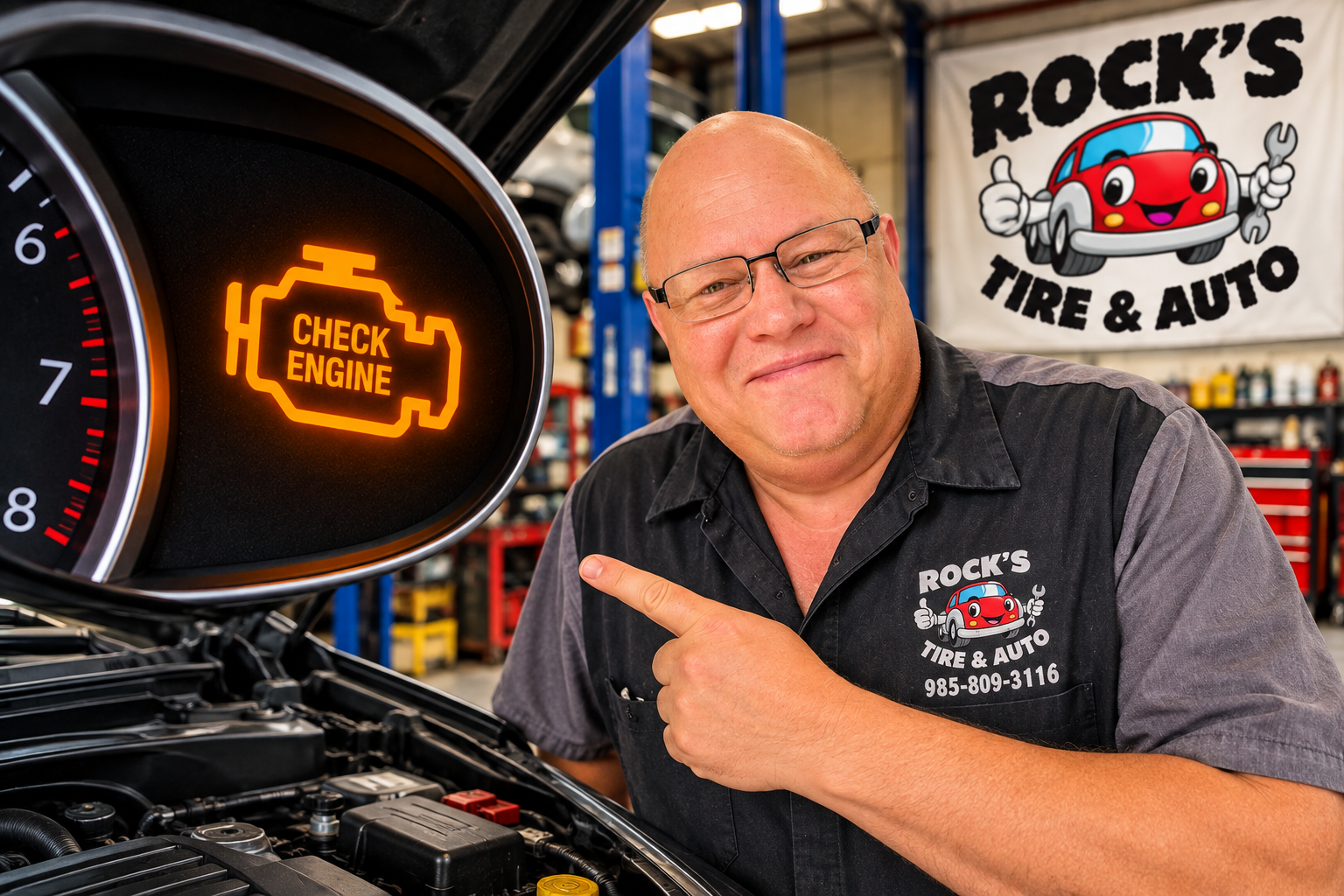
3. Is it safe to drive with the check engine light on?
It depends on the cause and how the vehicle is operating.
A steady check engine light can indicate a range of problems, some less urgent than others.
A flashing check engine light often indicates an active misfire that can damage the catalytic converter. Reduce load, safely stop driving, and arrange service.
If the light is accompanied by severe shaking, overheating, loss of power, or other serious symptoms, do not continue driving.
4. Can regular maintenance really prevent major repairs?
Regular maintenance can reduce the risk of certain failures and help identify developing problems.
Oil changes, cooling system maintenance, fluid services, and inspections are especially important.
However, maintenance cannot prevent every failure.
The goal is to reduce avoidable damage and improve reliability.
5. How do I know if my transmission is failing?
Common symptoms include slipping, delayed engagement, harsh shifting, shuddering, unusual noises, and transmission-related warning lights.
Other problems can cause similar symptoms, so proper testing is important before recommending major transmission work.
6. Should I repair an older car or buy a newer one?
Consider the cost of the repair, overall vehicle condition, expected future expenses, replacement costs, and your transportation needs.
An expensive repair doesn't automatically mean replacing the vehicle is the better financial decision.
A trusted technician can help assess the vehicle's mechanical condition.
7. What should I do if my car starts overheating?
Safely pull over as soon as possible and shut off the engine.
Do not continue driving an overheating vehicle.
Do not open the radiator cap or pressurized cooling system while hot.
Arrange an inspection or towing if necessary.
Continuing to drive can cause serious engine damage.
8. Why does my mechanic need to perform diagnostic testing if the code reader already identified a problem?
A diagnostic trouble code identifies a condition detected by the vehicle's computer.
It does not always identify the component that caused the condition.
For example, a code related to a sensor may be caused by wiring, an air leak, another mechanical issue, or the sensor itself.
Testing helps determine the actual root cause.
9. Are brake noises always an emergency?
Not every brake noise indicates an immediate emergency, but unusual noises deserve attention.
Grinding, changes in pedal feel, reduced stopping performance, or visible fluid leaks can indicate serious concerns.
Have the braking system inspected rather than assuming the noise is harmless.
10. How often should my vehicle receive a complete inspection?
The appropriate schedule depends on the vehicle, mileage, age, and driving conditions.
A vehicle inspection during routine maintenance visits can help identify wear, leaks, tire problems, and other developing concerns.
At Rock's Tire & Auto, our Vehicle Wellness Inspections help clients better understand their vehicles' overall condition.
11. Can I delay an expensive repair if my car still runs?
Sometimes a repair can be scheduled for a later date.
Other times, delaying the repair can create safety risks or additional damage.
Ask your technician to explain the urgency, potential consequences, and whether continued driving is advisable.
Never assume that a vehicle is safe simply because it still starts and moves.
12. Why are some automotive repairs so labor-intensive?
Modern vehicles often have tightly packaged components.
Reaching one failed part may require removing several other components.
Certain repairs also involve specialized procedures, programming, testing, or extensive disassembly.
The cost of a repair reflects more than the price of the replacement part.
13. Is it worth getting a second opinion on a major repair?
A second opinion can be valuable when you're considering a particularly expensive repair or when the diagnosis hasn't been clearly explained.
Make sure the second shop understands the original symptoms and has an opportunity to perform appropriate testing.
Comparing repair estimates is most useful when both estimates address the same confirmed problem and include comparable work.
14. How can I prepare financially for unexpected car repairs?
Consider creating a dedicated vehicle maintenance fund.
Review upcoming maintenance needs during regular service visits.
Ask for written estimates and discuss repair priorities.
If financing is available, review interest rates, fees, repayment terms, and total costs before accepting an offer.
15. What makes Rock's Tire & Auto different from other repair shops?
At Rock's Tire & Auto, we focus on more than fixing vehicles.
We emphasize accurate diagnostics, understandable explanations, transparency, convenience, and long-term relationships.
Our goal is to help clients feel confident about the decisions they make for their vehicles.
We believe exceptional service should make automotive care less stressful—not more complicated.
Final Thoughts: Car Repairs Don't Have to Be a Nightmare
A strange noise, warning light, or unexpected breakdown can be unsettling.
And yes, some automotive repairs can be expensive.
But the fear surrounding major repairs often comes from uncertainty.
Not knowing what's wrong.
Not knowing how much it will cost.
Not knowing whether the vehicle is safe.
Not knowing whom to trust.
That's where good communication and accurate diagnostics make all the difference.
You deserve to understand what's happening with your vehicle.
You deserve honest recommendations.
You deserve to know which repairs are urgent and which can be planned.
And you deserve to feel confident that the work is being done correctly.
At Rock's Tire & Auto, we believe automotive care should give you peace of mind—not keep you up at night.
Whether you're dealing with a mysterious dashboard light, a suspicious noise, or a repair estimate that makes your stomach drop, we're here to help you understand your options.
Don't let automotive repairs become your next horror story.
Let us help you keep your vehicle safe, dependable, and ready for whatever the road ahead brings.
Schedule Your Vehicle Service at Rock's Tire & Auto
Rock's Tire & Auto
1990 W 21st Ave
Covington, LA 70433
Call: 985-809-3116
Website: rockstireauto.net
Hours: Monday–Friday, 8:00 AM–5:00 PM
After-hours drop-off and pickup available.
Exceptional Care. Expert Repair.
Because the only scary thing about car care should be the Halloween decorations—not the repair experience.